A few days on from a brand new episode of Doctor Who, I present an alternative review to Revolution of the Daleks. Buckle up. This may get ugly.
2020 has been a tough year for so many people. A global pandemic. Lockdowns. An ever-increasing death toll as a result of coronavirus. Doctor Who should provide a distraction. An escape from the world around us for 75 minutes. Revolution of the Daleks should’ve promised an exciting adventure with one of the programme’s most popular creations. Instead, we were presented with a plotline which saw a politician triumphantly present new ‘defence drones’ outside 10 Downing Street. Drones which looked suspiciously like Daleks. We all knew where this was headed…
Defence Drones
The opening salvo of this episode began with the events of Resolution (of the Daleks) broadcast two years ago. Following a coincidental stop at the wrong roadside snackbar, the reconnaissance Dalek goes missing. Some time later curiously familiar Defence Drones are tested in front of a politician in a mock protest. In fairness this has been a year where violent protest has seemingly been on the increase. I for instance have watched in horror and disbelief as the UK Government has mishandled the Coronavirus pandemic and failed to protect the lives of its citizens. Now, my favourite TV show has sought to remind us of the possibility that we are all vulnerable to terrible consequences at the hands of incompetent politicians. I don’t need to watch that. We are living it!

We’ve seen a lot of politicians stood at podiums in 2020. I could also see the Prime Minister, a Home Secretary, or similar individual introduces us to something as ridiculous as defence drones that turn out to be deadly and capable of eradicating life. If someone went to a member of the current cabinet with one of these creations and explained how they could distribute the coronavirus vaccines then they’d be rolled out immediately! This plot towed close to the line of terrifyingly plausible. Ultimately, ‘Revolution of the Daleks‘ is a victim of fate. Recorded months ago, few could’ve predicted what would transpire after the episode was filmed. But given the current situation it failed to provide the escapism we all so desperately crave and was a horrible reminder of reality.
Return of the Yank
To support the narrative that we shouldn’t trust those in positions of power was the return of Chris Noth as Jack Robertson. Remember him from ‘Arachnids in the UK‘? A billionaire hotelier with aspirations of running for President of the United States of America. The blindingly obvious homage to Donald Trump. I hoped that my expectations would be subverted and Robertson was actually trying to warn people that these new defence drones were actually dangerous. Nope. It was as I anticipated. He’s responsible for the defence drones. If only he hadn’t been allowed to get away with that environmental disaster the last time we saw him!

His appearance was also a reminder of ‘Arachnids in the UK‘ which saw massive spiders simply left trapped in a Sheffield flat and the villain of the piece allowed to walk off into the sunset with no repercussions whatsoever. As a result of that inaction he acquires the Reconnaissance Dalek and, with the help of Nathan Stewart-Jarrett as Leo Rugazzi, a technical expert who can also clone biological cells, brings the defence drones into existence. Cue chaos, disaster and death although astonishingly it is Leo who brings it about because of his hubris. Remember kids, be wary of politicians, rich people and intelligent experts. Can’t trust any of them!
The Timeless Children Hangover
Now let’s deal with the elephant in the room. Unfortunately, the previous episode of Doctor Who was ‘The Timeless Children‘. Like so many others, I was far from enamoured by the conclusion to Series 12. The cannon busting revelations can and have been discussed at length elsewhere. However, it was the largely unsatisfying finale which left such a sour taste in the mouth. The Doctor was passive throughout and even in the final critical moments the decisive action had to be taken by notable guest star from Game of Thrones. Some things don’t change as The Doctor languishes in her cell. Good job Capt. Jack was back in this episode or she might still been stuck in that space prison!

Unsurprisingly it didn’t take long before the Doctor was able to escape. A few scenes with lots of lines on the walls failed to convince that the Doctor had been in there for a long time. On the plus side there were some nice monster cameos. The Silence were good weren’t they! Anyway, it would’ve been a truly unpredictable direction for ‘Revolution of the Daleks‘ to end with the Doctor right where she started the episode. Series 13 could then be incredibly bold and see Yaz and Capt. Jack unite to try and find the Doctor. But no the incarceration was largely meaningless, serving only to give Ryan time to decide to stay on Earth, and instead it was Capt. Jack to the rescue.
Capt. Jack saves the Doctor and the episode
The return of John Barrowman as Capt. Jack Harkness was a major selling point to actually watching this episode. For some it may be that his return was the only reason they watched ‘Revolution of the Daleks‘. His cameo in ‘Fugitive of the Judoon’ was pointless, serving only to distract the rest of the Fam whilst the Doctor encountered the Fugitive Doctor. This appearance was fortunately much more significant. Barrowman‘s charisma and enthusiasm for the role is always an entertaining watch. But he was more than that. Capt. Jack was the driving force for the action, breaking the Doctor out of space prison, investigating the Osaka Dalek mutant farm, infiltrating the Dalek ship and detonating the bombs on board. By comparison what did the Doctor do?

Remember when the Tenth Doctor punished the Family of Blood in that dramatic sequence at the end of that Series 3 two-parter? That was a good time. Unfortunately, the Thirteenth Doctor remains painfully passive. The action appears to just occur around her. She had verbal exchanges with Jack Robertson and Leo Rugazzi. Summoned the Daleks then taunted them from the TARDIS doors. Finally she gave out some hugs to the fam. The last one was of course vitally important.
Farewell to the Fam
Now where to start with ‘the Fam’. For so long we have bemoaned the fact that three companions is too many. With not enough time to delve into their characters, they’ve become a trio of largely bland scene fillers. In this episode we had Yaz sleeping in the borrowed TARDIS, trying to work out how to find the Doctor again. She came across like an ex who just can’t quite get over the breakup. She came across better when she did nothing. The ironic thing was that Yaz had the audacity to criticise Jack for needing praise! She’s the most needy character in Doctor Who we’ve ever seen! But fear not, John Bishop is joining the team because why return to the successful formula of Doctor plus one companion. This is because two spots have now opened up in the TARDIS.

The poor characterisation of the constituent parts of ‘the Fam’ made the break up severely lacking in emotion. What didn’t help was that despite a 75 minute running time both Ryan and Graham were again given little to do. Tosin Cole did share a dreary scene with Jodie Whittaker which dragged on and allowed Chris Chibnall to patronise the sections of fandom offended by his mutilation of the established cannon. By comparison Bradley Walsh and Graham seemed to be an after thought. This was epitomised by their departure scene where Ryan decides to leave so Graham decides to as well. It was almost fitting that we ended up back on the grassy hillside with Ryan attempting to overcome his dyspraxia because that first episode was probably the last time this interesting character point was actually mentioned.
The Chibnall Era
‘Revolution of the Daleks‘ proved to be a reminder of all the problems with this current era of Doctor Who. Firstly, it failed as entertaining escapism. Instead of lecturing us that mankind is slowly destroying the planet or that plastic is bad, we were taught that we shouldn’t trust politicians, technical experts or American businessmen. Speaking of that American businessman, the lack of any repercussions and villains being allowed to simply exit stage left proved catastrophic. But don’t worry it only happened TWICE during this episode as well. Meanwhile, the Doctor, our lead character and supposed hero, offered nothing other than exposition. Oh and hugs for the fam but the less said about them the better.

I’m sure the irony wasn’t lost on some as the RTD-era bronze Daleks obliterated the inferior Chibnall-era creations. I was frankly astonished that the television show itself would highlight in such obvious terms that the current era is so clearly worse than what has gone before. The ‘defence drones’ looked so flimsy opposite the bronze tanks from 2005. Similarly, the scenes in the space prison reminded you how great monsters like the Ood and Sycorax were before making you recall how rubbish the Pting was. Chibnall’s speech, sorry Ryan’s speech, concerning change would be far more effective if the rest of the episode didn’t highlight all it’s own flaws.
Conclusion
Summarising ‘Revolution of the Daleks‘ is fairly simple. It wasn’t as bad as ‘Arachnids in the UK‘ or the utterly abysmal ‘Orphan 55‘. Nor was it as deliberately offensive to long-term fans as ‘The Timeless Children‘. Instead it was a bland, predictable and ultimately underwhelming episode of Doctor Who. At least the next series will only have eight episodes to endure!
 The major issue is that there is no blending of the performers facial features and the artificial feline creation. In the original West End production the makeup was intended to conceal the human face and make it appear more feline. It wasn’t entirely effective but it gave you an idea. For this movie they simply haven’t bothered with any makeup which makes the differentiation between the real actor and the CGI facade all the more stark and jarring.
 Tom Hooper’s style of directing is typically tight and mid-shot to get up close in order to capture the emotions of his performers. That makes sense for Jennifer Hudson performing ‘Memory’ (more of that later), but isn’t as effective for the big dance numbers with multiple performers. When Hooper does push the camera wide it exposes yet another flaw in this doomed production. The set design, specifically the scale, is all over the place. There are certain shots where the cats look tiny in the environment, such as on the railway rails, and in others, unsurprisingly, they look human size.
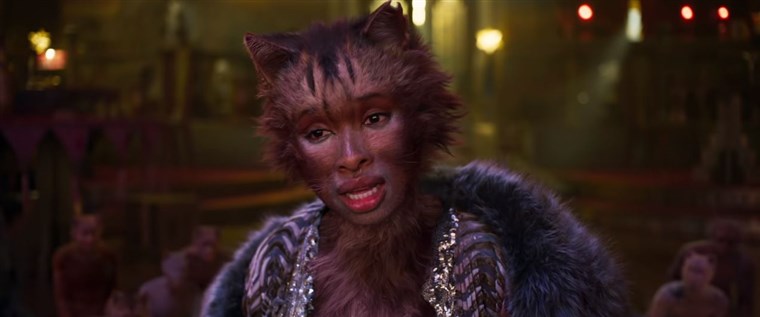 The ‘Memory’ moment is appropriately big. So highly anticipated was it that it was given prominence in that much maligned trailer. Jennifer Hudson, who won an Academy Award with her debut performance in ‘Dreamgirls’, has been brought in to deliver the song. She performs it well but even if you get beyond the CGI distraction there’s another one. I’m not sure if Hudson recorded the scene whilst suffering a heavy cold but the fluid streaming out of her nose completely takes you out of the moment. Elaine Paige need not worry. Her version of ‘Memory’ will remain the song’s pinnacle.
 Retro
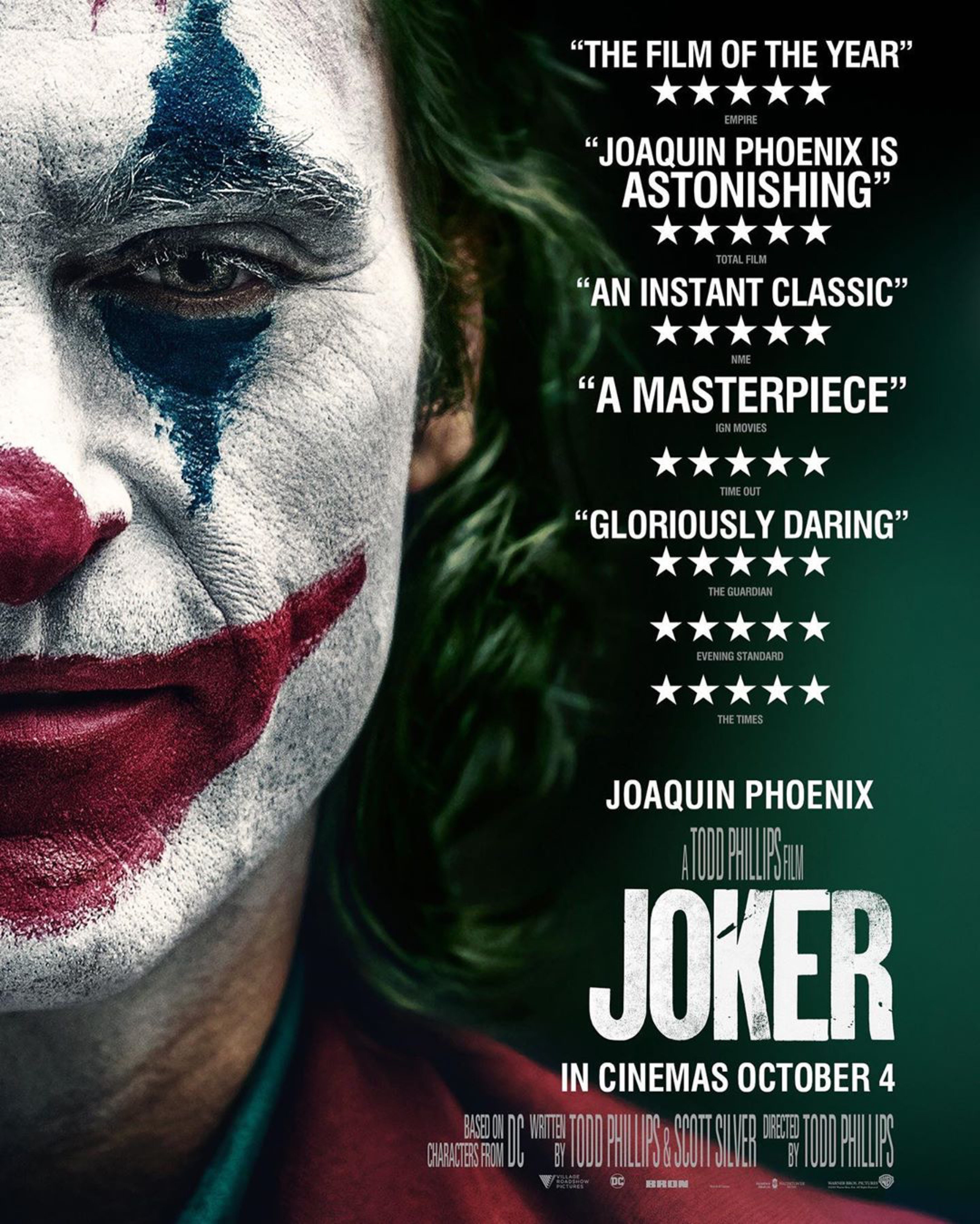
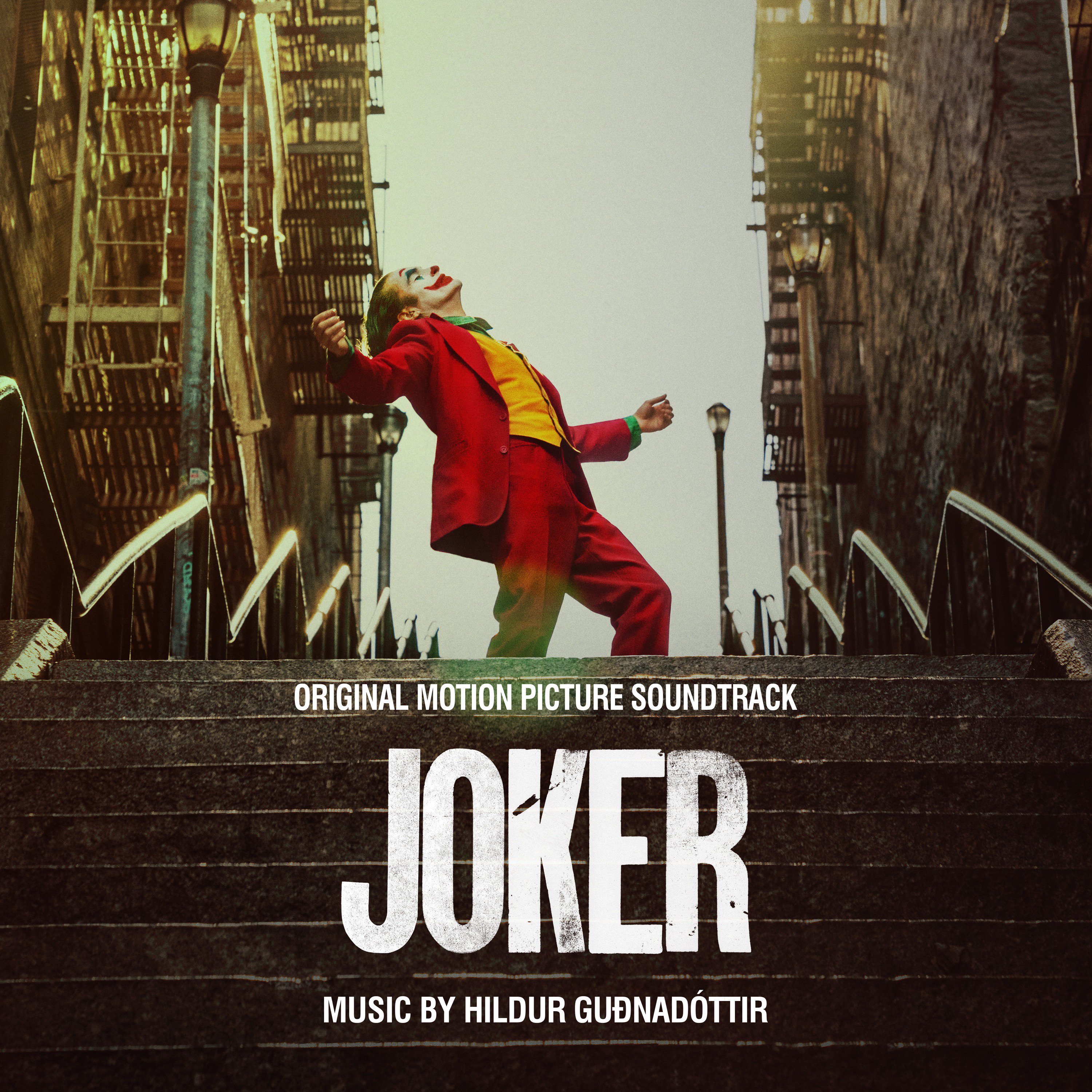
Retro Joaquin is Joker
 Directed by Todd Philips
 Violence
 Overall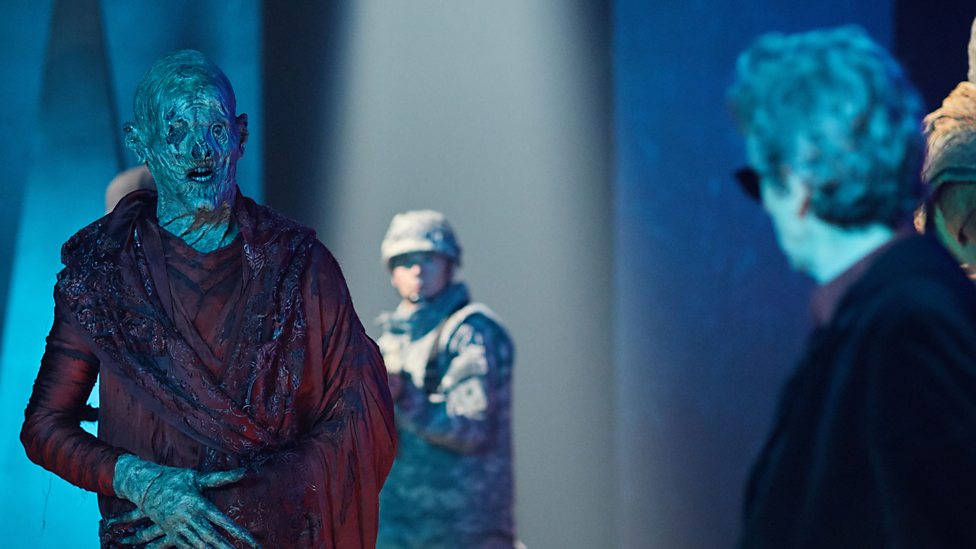


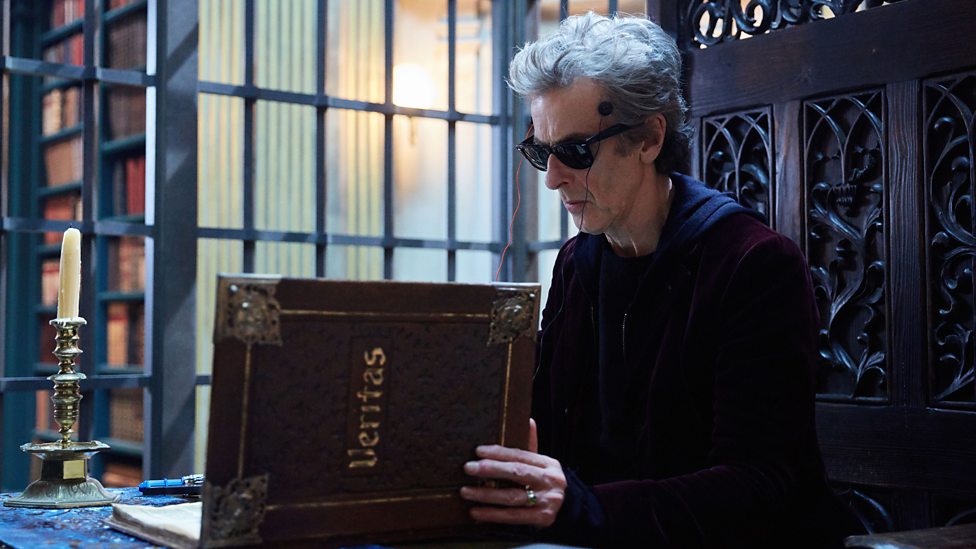 It has been a few days since I watched Doctor Who ‘Extremis’. On first viewing I was gripped and thoroughly engrossed with what was presented. However, the more I’ve thought about it, the more the episode falls apart…

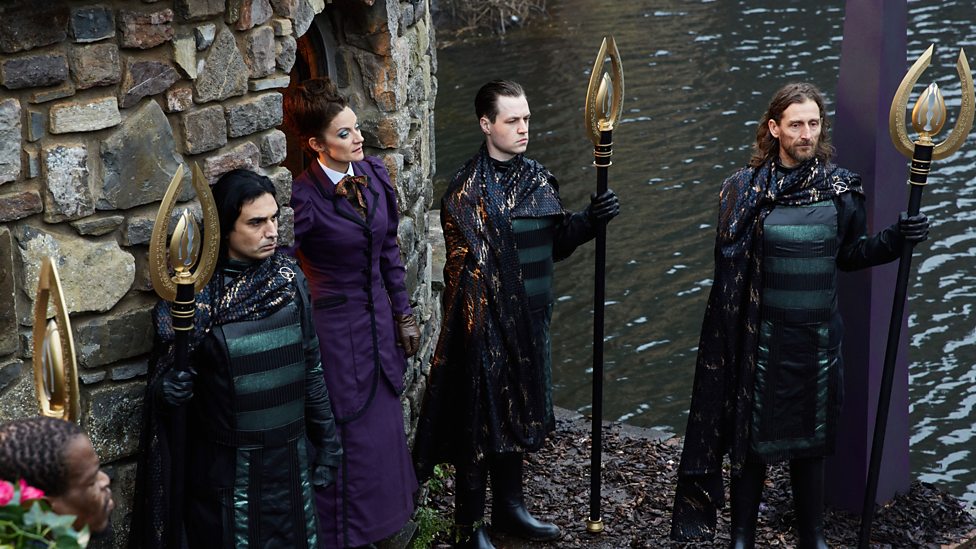 Missy
Missy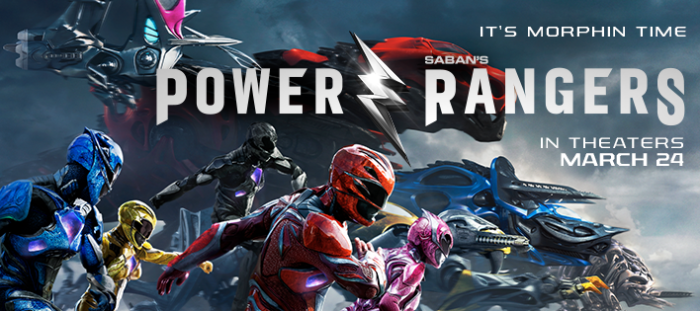 The Power Rangers from Saban are back in a new movie. Specifically a film adaptation of the origin story for the Mighty Morphin Power Rangers television series which became a global hit in the 1990’s. The series has since undergone multiple revisions including Samurai and Jungle Fury. Now given a big budget and the limitless scale of Computer Generated Imagery (CGI) available does this modern reboot do the source material justice?
 The debut series of Class has now concluded its run on BBC One. The DVD and BluRay have also been available for a couple of weeks. It also still remains available on the BBC iPlayer for several more months. But is it any good?


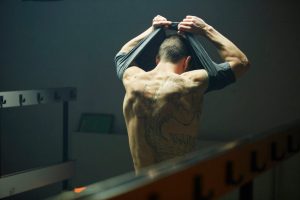


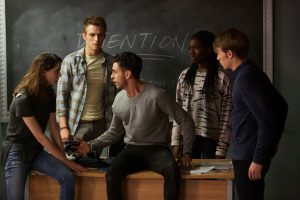



 Whilst Class was another positive production for BBC Wales’ drama studios in Cardiff it had an element of testing the water when it came to broadcast. It was the first major show to debut on the new BBC Three which was only available through the BBC iPlayer. Although receiving some promotion the programme was dependent on people at home seeking out the show at a time that suited them. As a result other more popular programmes dominated the iPlayer charts with the show failing to break into the Top 50 on demand shows meaning less than 185,000 people accessed the episodes. When the show did finally get a traditional broadcast slot on an actual channel it was buried by BBC One on a Monday night at 10.45pm. Worst still episodes were shown in pairs back to back. That meant that the second episode would finish in the early hours of Tuesday morning. Talk about not giving the show a fair chance at attracting to an audience! On BBC America Class will be screened after episodes of the next series of Doctor Who which although potentially odd to follow two series simultaneously does mean it will at least receive some prominence.

 Summerslam is WWE’s second biggest show of the year and the first proper Pay Per View (PPV) since the brand split. Both Raw and Smackdown were able to build and present their matches for the ‘biggest party of the summer’. The only exception to this was the main event which featured Brock Lesnar of Raw and Randy Orton of Smackdown.
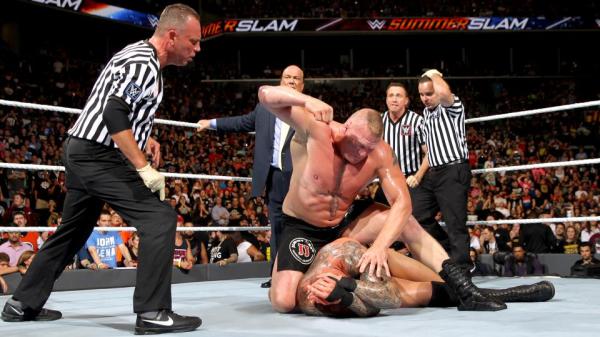 Anyway, back to Lesnar v Orton. The conclusion of the match was shocking and unexpected, even to long-term fans. There was no escaping the obvious. Lesnar caught Orton with an elbow to the head which split him open hard. If that was indeed the intended finish then it was a bold move. Since the move to the TV-PG rating WWE’s output has been significantly watered down with blood loss an obvious absentee. So for the main event on the second biggest show of the year to be stopped in this manner was unexpected to say the least. It was quite grizzly too as Orton clutched his head and when eventually Lesnar was pulled off the third generation superstar he was prone in a pool of his own blood. To complete the finale a F5 was delivered to Smackdown Commissioner Shane McMahon, which will inevitably lead to a storyline suspension. Brock Lesnar’s limited dates contract means that he’ll have some time off, possibly get in another UFC bout and return around Royal Rumble for Wrestlemania season. As a result, this main event achieved nothing whatsoever other than a mildly entertaining watch. Like the majority of Summerslam it was therefore a disappointment.
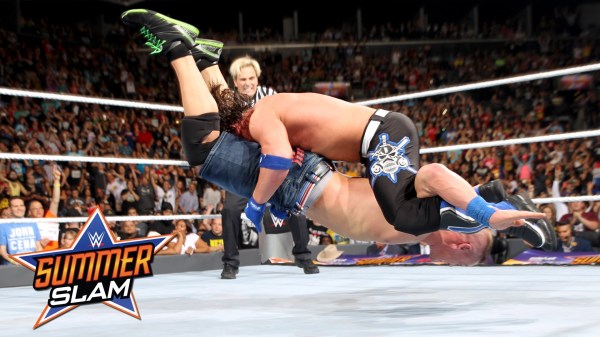 With the exception of the AJ Styles and John Cena match, which was spectacular, the rest of the card could be described as average at best. Sasha Banks failed to defend her women’s title as a back injury necessitated her dropping the strap back to Charlotte. During the match Banks took a nasty looking bump off the turnbuckle which could easily have broken her neck. It’s no wonder she’s injured her back based on that evidence. None of the other championship matches were much to write home about. One of them didn’t even happen as Rusev and Roman Reigns brawled without actually having a match, robbing those who had bought the event on PPV of seeing another title up for grabs. A new addition to the Championship scene also debuted at Summerslam as the Universal Championship belt was unveiled.
 This new title is not just ridiculous sounding, a champion of the entire universe, but now also looks terrible. It is so odd that the current Intercontinental title belt is an old version but at least it has a unique look to it. Now the WWE World, WWE Universal and WWE Women’s championships are almost identical with the only major differentiation being the colouring of the strap. I don’t have a problem with the consistent design but the red leather ruins it for me. What is more important however, and has rightly been pointed out by Mick Foley online, is that two competitors at the top of their game put on a good match for it.
 Although good the match was a little disappointing, there’s no getting around that. The first time Finn Balor and Seth Rollins had met in the ring was hoped to have had instant chemistry but although exciting and entertaining it just lacked a little something. As it has turned out Finn Balor suffered a shoulder injury early on and incredibly popped the dislocated joint back in within seconds. However, this did not seem to hamper his performance. The capacity crowd also seemed more concerned with voicing their displeasure to the appearance of the new belt than following the action in the ring which killed the atmosphere. The moment that Balor won the title should’ve been met with a deafeningly positive reaction. Sadly that reaction was absent. I had concluded that the PPV debut of the Demon couldn’t possibly end in failure. Perhaps the crowd had also reached this verdict. It set things up nicely for a series of Rollins/Balor classics as Seth fails to overcome the Demon, elevating the myth of this dark side of Finn Balor. Depressingly we have now been denied this feud as news broke that Finn would be spending months on the sidelines following surgery.
 On Raw just 24 hours after winning the title, Finn Balor relinquished it, causing the intended plan for the next few weeks to be ripped up and a hastily arranged series of matches worked out to crown a new champion. I am a big fan of Seth Rollins. Like most of the WWE Universe I am keen to cheer him despite his persistent heel character. But his buckle/throw powerbomb has not only caused the neck injury that retired Sting but has also embarrassed the WWE by injuring one of the company’s most exciting new talents. The curb stomp was replaced by the Pedigree as that was deemed too violent a move and surely now the buckle bomb has to be culled too.

 As the 31st Olympic Games drew to a close in Rio de Janeiro it is time to reflect on the latest instalment of the so-called ‘Greatest Show on Earth’. Prior to the event the International Olympic Committee (IOC) and the IAAF faced their biggest crisis in recent memory. The host country itself had safety concerns with the spread of the Zika virus and faced questions regarding financing and the water quality in Guanabara Bay. Yet despite all these issues the competitive action has spoken for itself, providing gripping tension, explosive excitement and unforgettable moments.
 With the Games fast approaching an investigation found state sponsored doping in Russia bringing into doubt their participation. Despite the findings, the IOC refused to grab the opportunity and impose a blanket ban on all Russian athletes, a mistake the IPC did not make. Instead individual sport’s governing bodies would make the decision regarding Russian participants. As a result Russia acquired a total of 56 medals, placing them fourth in the medal table. It is impossible not to ponder the legitimacy of these medals. Russian athletes are having samples retested and are being stripped of medals from Beijing 2008 and recently shot putter Evgeniia Kolodko lost her London 2012 silver medal. Those elevated to receive medals long after the event have been robbed of their moment to stand on the podium and see their national flag raised for them. Drug cheats ruin it for everyone. Justin Gatlin’s failure to reach the 200m final felt like justice but he leaves Rio having taken silver in the 100m. He has been banned not once but twice for doping offences but is still allowed to compete. If the Lance Armstrong saga proved anything it is that dopers are often ahead of the testers. The presence of Gatlin and Russian athletes jeopardises the sport and unfortunately with the golden poster boy from Jamaica appearing for the final time this process of spectator apathy could be accelerated.
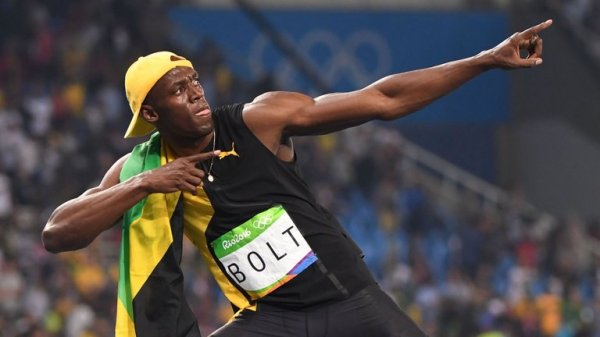 Usain Bolt is now unquestionably a legend. The triple treble of gold medals in the 100m, 200m and 4x100m relay is a feat which is incredibly unlikely to be bettered. He is not just a phenomenal athlete but the humblest of men. Bolt is a showman. Box office. A man that transcends athletics. His record at the Olympics is unheard of but all achieved without anything other than natural ability, most notably his stride length. It is no coincidence that when he was competing the stadiums were at their fullest. Unfortunately not all events were as well populated by spectators.
 One of the most exciting events in the early stages of the Olympics was the Rugby 7s tournament. Rugby Union had not been included in the Olympic Games since 1924 and in that 92 year gap the seven aside game had become the perfect competition to complete inside three days. The combination of 14 minute matches, incredibly fast athletes and stunning tries made for two riveting tournament for the medals. Few are likely to forget the tension of Team GB’s epic quarter final battle with Argentina, Japan defeating New Zealand, the Australian women overcoming their trans-Tasman rivals or Fiji’s offloading masterclass to seal their own historic gold medal triumph. Team GB’s women fell short in the final stages, failing to claim a bronze medal but the Men’s team, brought together over the summer, did take away a spectacular silver. This would prove to be just one of a record haul of medals for Team GB.
 After the incredible achievements of Team GB at London 2012 few imagined that it could be matched, especially without the backing of home support. But yet Team GB managed to not only match but then to exceed all expectations. Their 67 medals edged the 65 achieved in 2012. 27 golds also placed GB second in the medal table, delivering a bloody nose to traditional powerhouse China. In a number of interviews athletes praised the contribution that funding from the National Lottery has made. In the brutal reality of medals equal funding, performances like this prove that the strategy works. It was only 20 years ago that Team GB left Atlanta with only a solitary gold medal. The transformation is astonishing. Not only have the athletes themselves savoured their moment of glory but thousands of miles away so did the British public.
 Despite the time difference millions watched on as incredible moments became etched in history as Mo Farrah, Jade Jones, Andy Murray and Nicola Adams retained their titles. Those were just a few of our stars but contributions came from a wide variety of sports. Team GB picked up medals in the Velodrome, on the athletics track, on water, in the water, in the boxing ring and at the Gymnastics. That isn’t even a comprehensive list. The gripping elation of the penalty shootout victory for the women’s hockey team no doubt provided the highlight to many people’s Friday night. For me the most emotional gold medal victories came for Charlotte Dujardin and her legendary horse Vallegro, in his last competition, and Nick Skelton. At his seventh Olympic Games the 58 year old won individual showjumping gold after a tense six-way jump off. Stood on the podium the emotion took hold and the man who once retired after breaking his neck finally had his well-deserved moment.
 Whilst for many in Great Britain London 2012 will forever be the greatest Olympic games ever, without doubt Rio 2016 has been the greatest for our athletes. Team GB exceeded expectations and proved that our small island is still a country to be reckoned with in sporting competition. In Tokyo in 2020, anything could be possible…
 Bedwyr Gullidge