 How many more times are we going to go through this? Another Autumn series gets underway with a defeat to one of the Southern Hemisphere giants. However it was the manner of this defeat which was so galling. If anyone is looking to take positives from that performance then they are frankly deluded. Wales should be ashamed of that first half performance. Utterly ashamed. There were moments when Australia were simply executing plays as if they were going through a training session. The Wallabies have probably had more intense training opponents than the limp resistance which Wales offered.
 Statistics can too often be used to prove anything. But the facts are the facts and for Wales they make for grim reading. Wales have not won the opening match of the autumn since they defeated Romania in 2002. Stop playing the big boys. You are wasting everyone’s time and are just after our money. Wales under the Gatland/Edwards/Howley regime, installed 8 years ago now, have claimed 1 victory over Australia and another over South Africa in 2014. Add the All Blacks to the stats and that means 2 victories in 32 matches. A win percentage of 6.25%. If insanity is the repetition of events expecting different results then we are well beyond that point by now. I for one am sick of the excuses. They are being trotted out on such a regular basis that they have now become cliches. Classics such as, “we need to test ourselves against the best teams to learn” and “we always start slowly and get better the longer we are together” would be more appropriately used as the tag lines by the WRU marketing department.
Further blame is directed on the suitability of the Pro12 to prepare our players. Firstly, not all of the starting lineup, North, Roberts, Halfpenny and Charteris for instance, play in the Pro12. Secondly, anyone fortunate enough to see Ireland’s performance against the All Blacks, mere hours after Wales’ debacle, saw that argument evaporate for ever. The Welsh players and coaching team are comfortable in their malaise. Their press conference responses are prepared repetitions of those that have gone before. Oddly the Ireland v New Zealand clash took place in Chicago, USA. Therefore the Irish had to deal with the rigours of transatlantic travel. But yet the Irish players raised their game to levels unreached in 111 years. They played at pace and with an intensity and aggression which pressured the All Blacks throughout. Wales took a bus down the M4. They fell off tackles and looked so bewildered you would’ve thought that they were the team suffering jet lag.
 From their first lineout Australia flowed over the gainline and did not yield that momentum. Many fans were left bewildered by the selection of Alex Cuthbert for yesterday’s game. Wales attempted to trick the Wallabies by putting him on the left wing, rather than the right. But the smart green and golds targeted him immediately. A series of cross and box kicks exposed him early on, allowing Australia to regain the ball. This resulted in the extraordinary 80% possession statistics. Any youngsters wishing to watch a textbook control of a match then this was the game.
Fortunately for Wales the Wallabies did butcher a number of opportunities to rack up points. Dropped passes but also 11 points missed at goal. So it could, and frankly should, have been worse. Conceding 32 tries in the last 6 matches is as bad as it gets. Shaun Edwards’ reputation is in tatters. No longer can he justify his position based on the 2 tries conceded during the 2008 Grand Slam season. Astonishingly Wales didn’t leak a try when reduced to 14 men. But the way that they were sliced apart with a full complement, with basic passing skills largely, was truly worrying. The ‘up and under’ kicking strategy also reared its head again as the ball was gifted to the dangerous Israel Folau on numerous occasions.
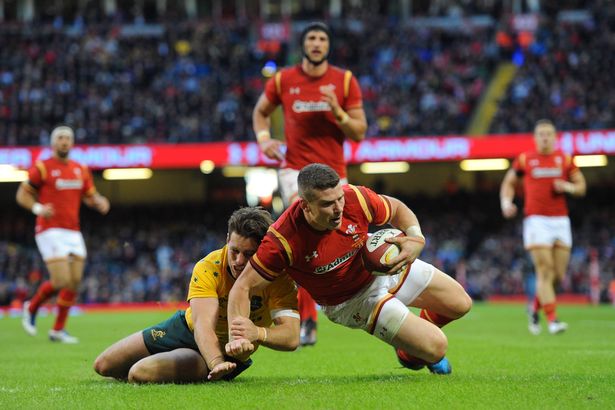 I thought Ross Moriarty carried the ball well. Scott Williams’ try also demonstrated that when players play what is in front of them and back themselves they can do good things. But once again Wales’ inability to convert overlaps with the line at their mercy is staggering from supposedly “professional” rugby players.
 The danger now is that the Welsh public are on the verge of abandoning this team of under-performers. As a result there were nearly 20,000 empty seats in the stadium, not helped by the £60+ price tag. In contrast Wales’ footballing counterparts are delivering on the field. Next weekend they play Serbia in a World Cup qualifier. It is no wonder therefore that tickets for the Argentina rugby clash are so freely available. We are talking tickets for £20 now. Those are still available but the Welsh public isn’t interested. This is a shame because Argentina are playing some superb rugby this year. They took apart Ireland at the World Cup last year and are threatening to do the same to Wales. Short of some drastic changes both on and off the field Wales are in real danger of slipping out of the top 8 in the World Rugby rankings. Just in time for Rugby World Cup seedings once again!

 However the challenge of defeating the All Blacks is an intimidating one. The Lions have only ever won a test against New Zealand once way back in 1971. They are consistently the best team in world rugby, reigning back-to-back world champions and with a phenomenal won/lost record. On top of that the Lions have a daunting series of matches against New Zealand’s five super rugby teams, plus the Maori’s and a provincial XV.


 As the 31st Olympic Games drew to a close in Rio de Janeiro it is time to reflect on the latest instalment of the so-called ‘Greatest Show on Earth’. Prior to the event the International Olympic Committee (IOC) and the IAAF faced their biggest crisis in recent memory. The host country itself had safety concerns with the spread of the Zika virus and faced questions regarding financing and the water quality in Guanabara Bay. Yet despite all these issues the competitive action has spoken for itself, providing gripping tension, explosive excitement and unforgettable moments.
 With the Games fast approaching an investigation found state sponsored doping in Russia bringing into doubt their participation. Despite the findings, the IOC refused to grab the opportunity and impose a blanket ban on all Russian athletes, a mistake the IPC did not make. Instead individual sport’s governing bodies would make the decision regarding Russian participants. As a result Russia acquired a total of 56 medals, placing them fourth in the medal table. It is impossible not to ponder the legitimacy of these medals. Russian athletes are having samples retested and are being stripped of medals from Beijing 2008 and recently shot putter Evgeniia Kolodko lost her London 2012 silver medal. Those elevated to receive medals long after the event have been robbed of their moment to stand on the podium and see their national flag raised for them. Drug cheats ruin it for everyone. Justin Gatlin’s failure to reach the 200m final felt like justice but he leaves Rio having taken silver in the 100m. He has been banned not once but twice for doping offences but is still allowed to compete. If the Lance Armstrong saga proved anything it is that dopers are often ahead of the testers. The presence of Gatlin and Russian athletes jeopardises the sport and unfortunately with the golden poster boy from Jamaica appearing for the final time this process of spectator apathy could be accelerated.
 Usain Bolt is now unquestionably a legend. The triple treble of gold medals in the 100m, 200m and 4x100m relay is a feat which is incredibly unlikely to be bettered. He is not just a phenomenal athlete but the humblest of men. Bolt is a showman. Box office. A man that transcends athletics. His record at the Olympics is unheard of but all achieved without anything other than natural ability, most notably his stride length. It is no coincidence that when he was competing the stadiums were at their fullest. Unfortunately not all events were as well populated by spectators.
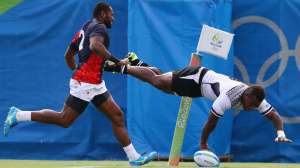 One of the most exciting events in the early stages of the Olympics was the Rugby 7s tournament. Rugby Union had not been included in the Olympic Games since 1924 and in that 92 year gap the seven aside game had become the perfect competition to complete inside three days. The combination of 14 minute matches, incredibly fast athletes and stunning tries made for two riveting tournament for the medals. Few are likely to forget the tension of Team GB’s epic quarter final battle with Argentina, Japan defeating New Zealand, the Australian women overcoming their trans-Tasman rivals or Fiji’s offloading masterclass to seal their own historic gold medal triumph. Team GB’s women fell short in the final stages, failing to claim a bronze medal but the Men’s team, brought together over the summer, did take away a spectacular silver. This would prove to be just one of a record haul of medals for Team GB.
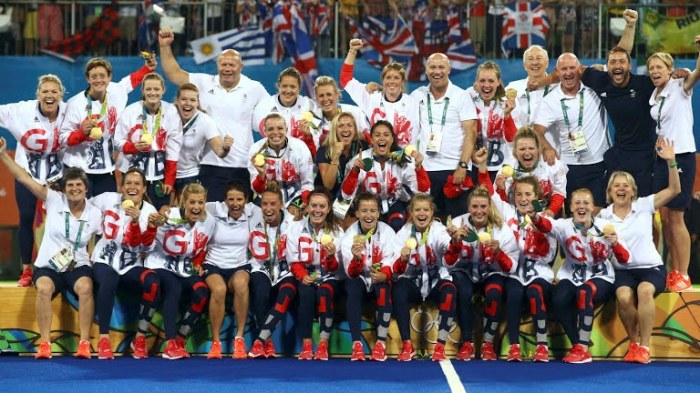 After the incredible achievements of Team GB at London 2012 few imagined that it could be matched, especially without the backing of home support. But yet Team GB managed to not only match but then to exceed all expectations. Their 67 medals edged the 65 achieved in 2012. 27 golds also placed GB second in the medal table, delivering a bloody nose to traditional powerhouse China. In a number of interviews athletes praised the contribution that funding from the National Lottery has made. In the brutal reality of medals equal funding, performances like this prove that the strategy works. It was only 20 years ago that Team GB left Atlanta with only a solitary gold medal. The transformation is astonishing. Not only have the athletes themselves savoured their moment of glory but thousands of miles away so did the British public.
 Despite the time difference millions watched on as incredible moments became etched in history as Mo Farrah, Jade Jones, Andy Murray and Nicola Adams retained their titles. Those were just a few of our stars but contributions came from a wide variety of sports. Team GB picked up medals in the Velodrome, on the athletics track, on water, in the water, in the boxing ring and at the Gymnastics. That isn’t even a comprehensive list. The gripping elation of the penalty shootout victory for the women’s hockey team no doubt provided the highlight to many people’s Friday night. For me the most emotional gold medal victories came for Charlotte Dujardin and her legendary horse Vallegro, in his last competition, and Nick Skelton. At his seventh Olympic Games the 58 year old won individual showjumping gold after a tense six-way jump off. Stood on the podium the emotion took hold and the man who once retired after breaking his neck finally had his well-deserved moment.
 Whilst for many in Great Britain London 2012 will forever be the greatest Olympic games ever, without doubt Rio 2016 has been the greatest for our athletes. Team GB exceeded expectations and proved that our small island is still a country to be reckoned with in sporting competition. In Tokyo in 2020, anything could be possible…
 Last week I questioned the suitability of continuing with the same coaching team who have been at the helm of the Welsh rugby team for the past 8 years. Unfortunately my words were not heeded as attack coach Rob Howley and forwards coach Robin McBryde were rewarded with new contracts which will take them to the 2019 Rugby World Cup. The talk this week was that Wales had taken steps forward on this tour, embracing a new attacking style, burying ‘Warrenball’ and starting to play in the wider channels. Yet in the third Test they returned to type, exposing their fragility and poor skills.
 Having reduced their incessantly futile kicking game in recent matches it came back with a vengeance today. The box kick and up-and-under strategy for contestable kicks to gain territory, plus the potential to regain possession and build momentum had been reduced in favour of attacking wider channels with ball in hand. Kicks that remain on the field have been a hallmark of Wales’ game in recent years as they backed their defensive chase but against New Zealand it is suicidal. Israel Dagg and Ben Smith cut Wales to bits at times as the defensive system failed yet again.
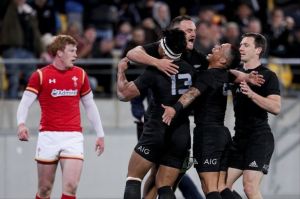 The facts don’t lie. Wales have conceded a staggering 27 tries in only five matches. Yes three of those games have been against the electrically skilful All Blacks but at what point do we admit that it is not working. I’m sure some will churn out the “it’s been a long season” cliché. By comparison Maro Itoje has redefined athletic second row play and performed consistently well all season with regular man of the match efforts. He has started 20 matches for Saracens this season (coming off the subs bench an additional 3 times) and in the high intensity competitions of the English Premiership and the Champions Cup but only losing 1 match which he was a substitute for anyway. His international appearances include 8 test matches (7 starts) for England with a phenomenal record of no defeats. That is a total of 31 match appearances. Sam Warburton, so often praised for his athleticism, only made 8 appearances for Cardiff Blues, plus 14 in a Wales jersey, totalling 22 versus Itoje’s 31 matches. Yes it has been a long season for the Wales players but if they spend so much time in the gym and rate themselves as athletes then clichés of long seasons have no weight whatsoever and are thoroughly disproved when compared to the efforts of other players.
 Another brave effort from Wales but ultimately in vain as the double world champions accelerated away and the Test series was lost. With the scores level at 55 minutes the All Blacks posted 26 unanswered points in the next dozen minutes to blow Wales out of the water before a late flourish gave the scoreline more respectability. Notably Beauden Barrett came onto the field earlier than anticipated and attacked the Welsh defensive line which was fatiguing, losing it’s shape and with limited line speed. Wales’ play had been largely positive, attacking wider channels and stretching New Zealand’s defensive line which resulted in a good try for Alun Wyn Jones. Opportunities however became limited as once again lineout accuracy dwindled, particularly when in promising positions on the field.
 Backs/Attack – Rob Howley
 Leicester City are Premier League Champions. As Rafa Benitez would say, “Fact”.
 However, that is the beauty of sport. Football still remains human being against human being and Leicester City have proved that consistency of performance achieves results. This is no cup run, fortuitous draws culminating in a succession of one off performances. The beauty of a league table is that it cannot lie. The team who picks up the most points, playing exactly the same teams as everybody else, finishes top. Of their 37 matches, they have won 23, drawn 11 and only lost 3, the best results of any team in the division and that is why they are champions with a game to spare. How they have achieved that is for pundits to discuss but the fact is that nobody can deny this achievement is probably the greatest sporting triumph ever.
 Today, Saturday 30th April, the Principality Stadium in Cardiff once again hosts the fourth annual Judgement Day event with all four Welsh regions coming together for a doubleheader of rugby action. With nearly 70,000 tickets sold it is likely to be hailed as a big success. However, if regional rugby is going to grow and capture the imagination of the Welsh people this event is not the way to achieve it.
 As is sometimes the case in sport the scoreline is not always a fair reflection of the match and never is that more true than with this result. Incredibly, Wales could have won at the death and hopefully they would’ve been arrested for robbery had that actually happened. The cold truth is that there was only one team in the contest and they were wearing white.
 England
 Wales
Wales Rugby World Cup 2015 was a huge success. Despite eye-watering ticket prices and a decision to have football stadiums hosting matches instead of the rugby heartlands the tournament generated fantastic atmospheres and delivered some particularly memorable matches. Few will forget Japan defeating the Springboks in the ultimate example of having confidence in ones own ability. New Zealand played a brand of ‘Total Rugby’ from a different planet against France in Cardiff. There was the controversy of Australia’s last minute victory against Scotland and Craig Joubert’s dash from the pitch. Wales overcame all the odds created by a lengthy injury list against England to pull off a famous win. The hosts failing to emerge from their pool, Stuart Lancaster losing his job and the entire Sam Burgess saga was pure sporting soap opera. The final match itself also provided a tremendous advert for the sport with plenty of action and drama, ably controlled by a Welshman.
 The relationship between the Welsh Rugby Union and the professional regional teams has certainly been strained in recent years and 2015 was no different. Not that long ago we had the Faletau affair with the talented No. 8 venturing to Bath anyway, leaving the Dragons with no transfer fee and the WRU left with egg on their face. It is a peculiar situation with the Union trying to attract it’s big name stars back to Wales with central contracts but their contribution to their region is often limited. There are five professional teams, Scarlets, Ospreys, Dragons, Blues and of course Wales, all with a core support. Plus, there is your local grassroots club in the town or village where you live. With so much rugby available, clashes are bound to happen, people have busy lives and responsibilities, the costs add up, plus the amount of television coverage, it is no wonder that attendances are hampered. In a few weeks the Six Nations will return and the nation will join forces again but the poor players will be flogged further after the tournament with another four Test matches by the end of June, three of which are away to the World Champions.
 The law book, refereeing and the crucial interpretation variations are probably the most debated part of the sport. A demand for accuracy has resulted in an increasing reliance on the Television Match Official hampering the flow, momentum and entertainment aspect of the game. The Maul in particular has proved to be an effective source of points because the whole area has become a shambles. Players join the maul in front of the ball, the player with the ball often detaches and moves to the back in order to guide the drive and defenders are blocked from tackling the ball carrier. Equally the scrum has resulted in plenty of lost time with teams using the set piece as a source of points instead of a simple way of restarting the match.
 2015 was also sadly the year when we lost the first rugby superstar, Jonah Lomu. 20 years ago he changed the sport and became a global icon. His power and pace was matched by his humility. Sadly, he was never a World Cup winner but there is no greater tribute to Lomu and the equally imposing Jerry Collins, than having later All Black icons McCaw, Carter and others successfully retaining their trophy and cementing their place as perhaps the greatest sports team in history.
 Bedwyr Gullidge