Let’s get this out of the way from the off; Cats is quite possibly the worst film I have ever seen in a cinema. I shall explain my rationale for such a statement in due course but basically it fails on every single level.
The release of the trailer for Cats brought a collective shock. Shots of high profile actors with completely ineffective CGI triggered global ridicule. Director Tom Hooper kept working right up until the very last moment to try and salvage the picture. Unfortunately, his efforts have been in vain.
A decision was made to realise actors in cat form using computer generated fur technology. It does not work. Faces are merely transplanted onto an artificial frame. As a result every shot leaves the viewer perplexed, possibly horrified but crucially distracted. It is a significant stumbling block and the fact that at no point senior creative people involved in the production didn’t recognise that the technology had failed and would sink the box office takings is astonishing.
 The major issue is that there is no blending of the performers facial features and the artificial feline creation. In the original West End production the makeup was intended to conceal the human face and make it appear more feline. It wasn’t entirely effective but it gave you an idea. For this movie they simply haven’t bothered with any makeup which makes the differentiation between the real actor and the CGI facade all the more stark and jarring.
Although there is seemingly no need for the costume department to become involved given the reliance on the computer, some characters do have costumes. For example, Dame Judi Dench and Idris Elba wear fur coats. Fair enough if this is part of the look for the character, consistent with the CG fur but then those coats are removed. Elba for instance appears without his outer garment in one scene which just makes it look like his character is completely naked. Except for CGI fur of course. It is utterly bizarre. Other cats are seen wearing shoes, helpful when Skimbleshanks the railway cat tap dances across screen but it is impossible not to ponder, “why are these cats wearing shoes?”
Additionally, the choreography in terms of the physical performance is inconsistent. At one point Jennifer Hudson crawls away on all fours, like a cat. Not long later she walks in like a bipedal mammal. Similarly, seeing Dame Judi Dench reclining in her basket like Kate Winslet posing for her drawing in ‘Titanic’ seems rather undignified. So this creates further inconsistency. Characters behaving like cats one minute, nuzzling each other affectionately then dancing superbly in the next. We know these are human beings pretending to be cats but be consistent with how they are presented and you might convince viewers that you’ve actually put some thought into all this. The choreographed dance numbers are strong but the direction of them leaves a lot to be desired.
 Tom Hooper’s style of directing is typically tight and mid-shot to get up close in order to capture the emotions of his performers. That makes sense for Jennifer Hudson performing ‘Memory’ (more of that later), but isn’t as effective for the big dance numbers with multiple performers. When Hooper does push the camera wide it exposes yet another flaw in this doomed production. The set design, specifically the scale, is all over the place. There are certain shots where the cats look tiny in the environment, such as on the railway rails, and in others, unsurprisingly, they look human size.
Another major issue with the film stems from the source material and should’ve been expected. There isn’t really a plot to Cats. Originally developed as musical accompaniments to a series of T. S. Eliot poems it remains just that. A series of songs about individual cats and eventually one of them will pass on to the Heaviside Layer in some sort of implied mercy killing. This group of Jellicle cats gather at the Jellicle Ball to make the Jellicle choice. The term Jellicle comes from the original T. S. Eliot poem describing a specific type of nocturnal black and white cat. But if all the cats looked the same it wouldn’t be that appealing visually so that uniformity is abandoned. Yet the term Jellicle remains. It is nonsense but over the years the songs in particular have connected with audiences. Not least the show’s big hit ‘Memory’.
 The ‘Memory’ moment is appropriately big. So highly anticipated was it that it was given prominence in that much maligned trailer. Jennifer Hudson, who won an Academy Award with her debut performance in ‘Dreamgirls’, has been brought in to deliver the song. She performs it well but even if you get beyond the CGI distraction there’s another one. I’m not sure if Hudson recorded the scene whilst suffering a heavy cold but the fluid streaming out of her nose completely takes you out of the moment. Elaine Paige need not worry. Her version of ‘Memory’ will remain the song’s pinnacle.
Taylor Swift, a self-confessed cat lady, fully embraces her brief role. Although the false English accent is toe-curling, she is probably the highlight. Swift and Jason Derulo are arena performers and unsurprisingly deliver the best moments in the film, knowing how to convey a song to thousands in an audience rather than delivering a performance to camera. Conversely, James Corden and Rebel Wilson doing yet more ‘chubby comedy’ is as embarrassing as it is unfunny. Both are better than this. More traditional stage actors, Dame Judi Dench and Sir Ian McKellen bring gravitas but lack the dynamism, amongst other things, that this version of Cats really needs. Francesca Hayward as Victoria is clearly a talent, you’d expect that from a Principal ballerina at The Royal Ballet, but the decision to have her play a white cat is bordering on the abhorrent and possibly the biggest sin of the entire film.
Overall, Cats is horribly and catastrophically executed. Without doubt one of the worst things ever to be released into cinemas. On every technical level it fails spectacularly. No wonder it stands to lose A LOT of money.
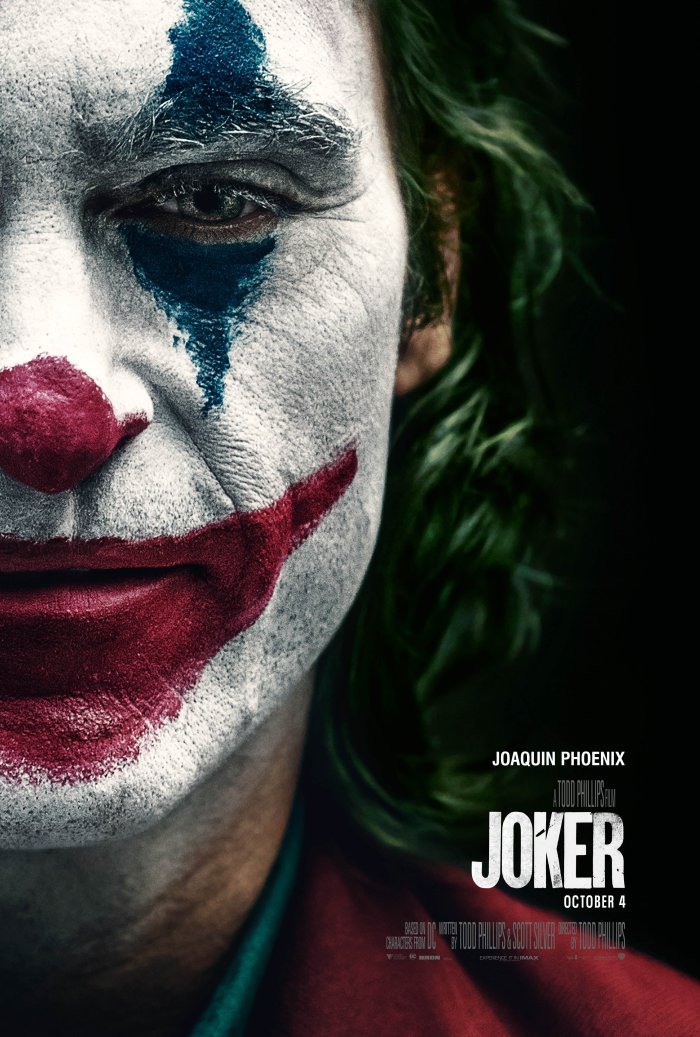 Retro
Retro Joaquin is Joker
 Directed by Todd Philips
 Violence
 Overall
 Following the tedious ‘Batman Vs Superman’ and the nightmarish ‘Suicide Squad’, The triumphant ‘Wonder Woman’ triggered optimism for the greatly anticipated ‘Justice League’. Unfortunately, the critical reception has been far less than stellar. It was therefore with great trepidation that I approached ‘Justice League’. Perhaps these low expectations helped me conclude that it’s actually not too bad.
 Unfortunately, the plotting is entirely formulaic. There is little doubt from the outset that Superman would return, with death merely an inconvenience. This becomes increasingly inevitable given the presentation of the enhanced threat levels provided by the villain; Steppenwolf. Perhaps appropriately the logic behind the three cubes, one of which may or may not have been his mother, defies the understanding of mere human mortals. Steppenwolf is fairly convincing as an all-conquering destroyer so that Superman’s abilities would be required in addition to the other members of the team, the makeup of which is very deliberate.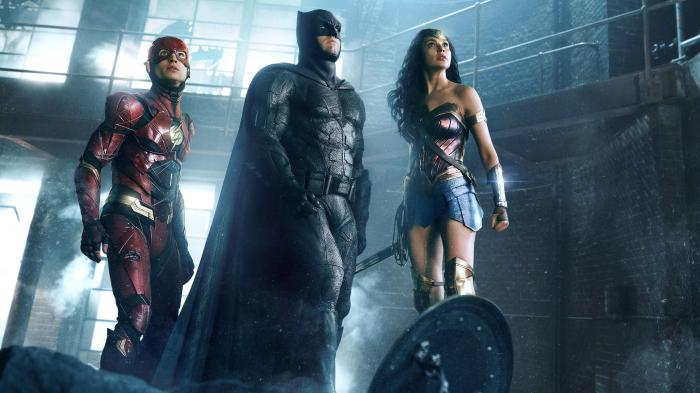
 Gal Gadot is the star of the piece with a sparkle and the twinkle in the eye required for a good Wonder Woman. Conversely Batfleck is just bland, lacking any edge which Keaton and Bale unquestionably brought to the role. Jason Momoa as Aquaman was flawless and badly under-utilised but I look forward to seeing the Aquaman movie in 2018. Similarly, I wouldn’t mind seeing more of Cyborg’s struggles with his new form that went underdeveloped. But do I want to see a Ben Affleck led Batman movie? Absolutely not. Ezra Miller as The Flash is in the middle of the two, tolerable but not massively engaging. Henry Cavill’s Superman also manages to generate some emotional moments when reunited with the wonderful Amy Adams as Lois Lane and of course his Mum. Outside of that there is a procession of generic action sequences until finally we reach a conclusion.
 The Power Rangers from Saban are back in a new movie. Specifically a film adaptation of the origin story for the Mighty Morphin Power Rangers television series which became a global hit in the 1990’s. The series has since undergone multiple revisions including Samurai and Jungle Fury. Now given a big budget and the limitless scale of Computer Generated Imagery (CGI) available does this modern reboot do the source material justice?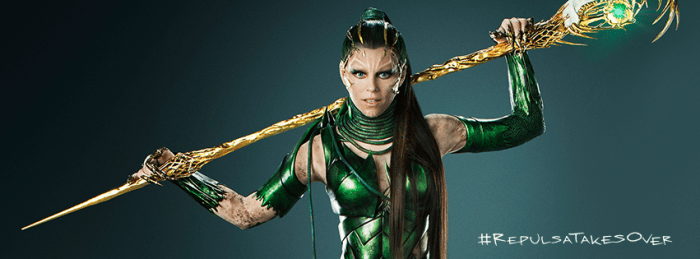

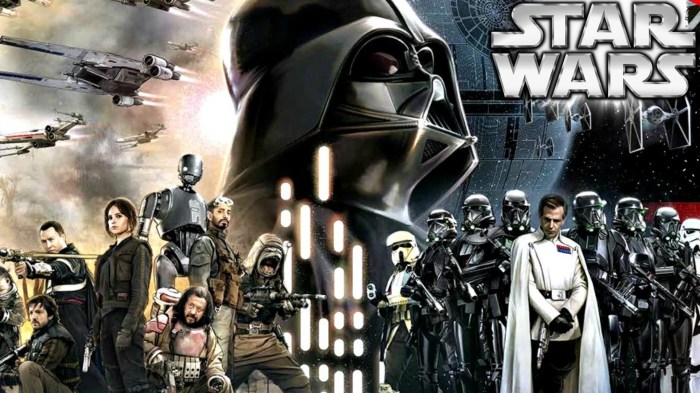

 The critics have been pretty scathing about this latest offering from the DC comic universe whilst fans have been very vocal with their enjoyment and aggressive towards those who have not shared their opinions. As is always my policy, only by viewing the piece can comment be made. So I have watched it and have thus formulated my own opinions. However I have found myself falling off the fence towards the opinions shared by critics.
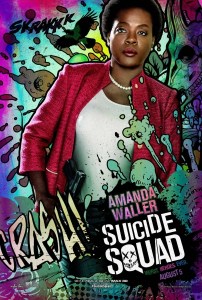 This is probably an old-fashioned idea but this film needed someone to write the plot and a scene breakdown on a piece of paper. Such a basic act would’ve revealed the well documented glaring structural problems that exist throughout. As expected, the film required a number of scenes introducing the vast cast of characters who would form Taskforce X. These introductions are not balanced in the slightest with numerous flashback sequences and a central focus on Deadshot and Harley Quinn but more of them later. Making the introductions is Amanda Waller, a Government official who has struck upon the nonsensical idea of using the most dangerous criminals to execute dangerous missions. She is deliberately unlikeable to encourage the audience to root for the squad, revisiting conspiracy-fuelled themes of distrust for authority figures.
 Cara Delevingne is a model trying to act and frankly it comes across that way. She is the most bland villainess to hang an entire movie on. The key to any good drama is to create peril with an imposing and believable villain. It is no wonder that when it really matters her dialogue is heavily manipulated by voice effects in an attempt to add gravitas and threat which Delevingne is simply incapable of delivering. As the movie reaches is climax the Enchantress has created a Stargate in the sky because magic is the perfect excuse for yet another CGI monstrosity that looks visually impressive but lacks meaning or intelligent thought. Similarly, her faceless soldiers are meaningless fodder to add jeopardy and her brother, another CGI creation which is particularly unconvincing.
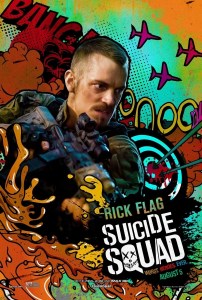 Part of the Enchantress’ backstory is that this mythical being, worshipped as a God by an unidentified Central American civilisation, has taken over the body of archaeologist June Moon. She in turn is the love interest of Rick Flag, the military man charged with controlling the unruly Suicide Squad. His character is quite strong, admittedly with questionable motivation but he is a solid presence in the film and shares the lead with the only major actor Will Smith as Deadshot with the two characters providing an engaging double act throughout.
 Deadshot is the real lead of the piece, sharing entertains exchanges with Rick Flag. This is unsurprising given the casting of consistent leading man and box office draw, Will Smith. The appearance of such a familiar star does mean that Deadshot’s mask is only worn briefly so as not to conceal the film’s top star. Deadshot does however receive the most attention regarding his backstory. In fact Deadshot receives three introductions all of which are focused on his daughter. Whilst it is of course difficult to be separated from your child the point is excessively laboured and frankly he may be a talented shot but he could always get a job at Wallmart to provide for his daughter instead of choosing the life of the hitman. Fortunately Smith’s ability as the wise-cracking lead, mirroring Robert Downey Jr’s Ironman for Marvel, showcase those skills honed in other summer blockbusters such as ‘Independence Day’ and ‘Men in Black’. This influence is crucial in making the chaos presented remotely passable for viewers.


 The character of Harley Quinn is intriguing, corrupted by the Joker and choosing to follow in his crazed footsteps. Margot Robbie is tasked with bringing her to the screen and is very entertaining as the pigtailed lunatic. However, Harley is completely over sexualised, bordering on the grotesque mysogynistic. Sexually licking the bars of her cell is one thing but deliberate shots of her hotpants and rear end are simply unnecessary. Her impractical outfit is then maximised by a predictable rain shower which allows for Harley’s entry into a wet t-shirt contest. Whilst I am sure none of the suits involved in constructing this film are even remotely aware of the popularity of Harley Quinn with cosplayers but the sexualised image presented in this film is going to be replicated by teenage girls. As a result all those involved, from the film makers to the distributor, have a responsibility to consider how these images are going to impact on their audience. Another individual hampered by the decisions made regarding their onscreen appearance is the Joker.
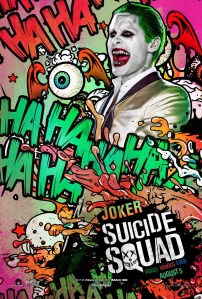 Jared Leto’s Joker is an irrelevance in the film. Whereas Ben Affleck’s Batman makes a few cameos over the two hour duration, the Joker can only be described as having an extended cameo. I’m not sure if I was expecting more of him during the film but watching Leto’s portrayal I am grateful that his appearances were limited. He has to provide the worst onscreen version of the Joker ever. It is a modern interpretation but that results in an image conscious gangster, hanging out in nightclubs, covered in bling and tattoos. He is unpredictable and manic, capable of spinning on a razor blade but the Joker’s unpredictability should also extend to his image. The sinister false smile is sadly now only a tattoo on the back of his left hand. Making the Joker look like a typical gangster, save for the green hair, reduces him instead of elevating him above stereotypes. This gangster image therefore smothers what interesting aspects Leto was attempting to bring to the role. The one successful line is when the Joker declares that he is “just going to hurt you, really, really badly”. Leto is stripped back and delivers the line in a truly sinister manner, it is just a shame that there is so little else that matches this high point.
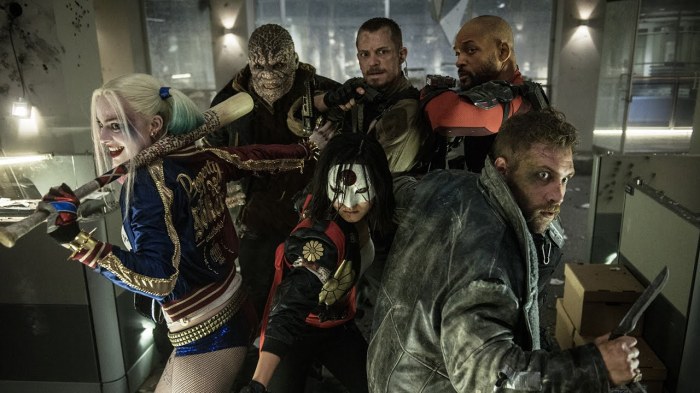 I cannot understand how the final product can possibly be the vision which the director David Ayer had set out with when embarking on the project. It is a textbook example of a studio corrupting their own output based on the reactions of the public to other movies. For example jokes are inserted, not skilfully but in a manner akin to dropping an anvil onto an orchestra and expecting a symphony, because Deadpool’s wit entertained audiences. Similarly, ‘Guardians of the Galaxy’ featured a brilliant soundtrack, presented as a mix-tape which entertains both Star Lord during the story as well as the watching audience but the retro tracks also juxtapose so well with the futuristic alien visuals. Suicide Squad however just drops recognisable tunes into the edit with no connection whatsoever to the visuals. The most appropriate word to describe it is ‘cynical’.
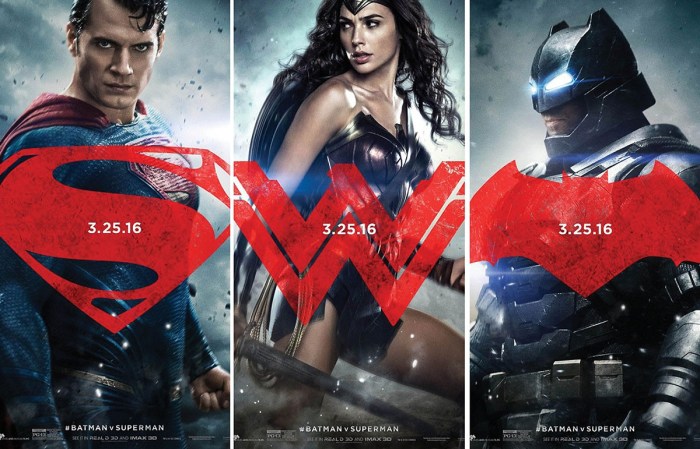
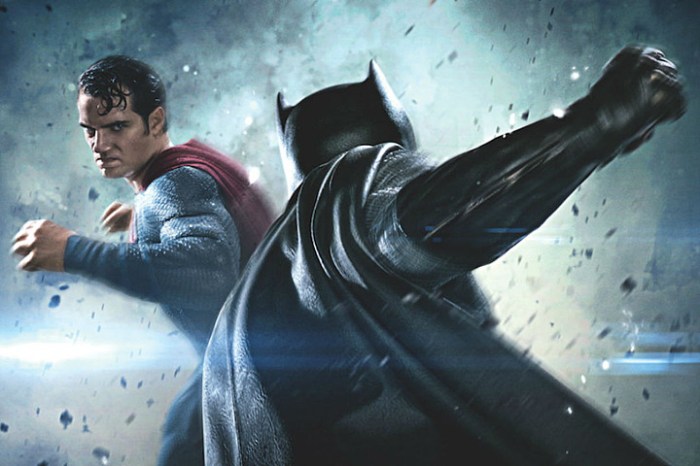 The alien Kryptonite element centres around Jesse Eisenberg’s Lex Luthor, a frankly hideous portrayal, spouting nonsensical verbal diarrhoea in an attempt to convey the character’s lunacy. Similarly suffering from the story is Lois Lane, often pointed to as a beacon to other media of how to portray female characters as strong-willed and empowering. Instead, Lois is reduced to the role of ‘damsel in distress’ not once but thrice, Superman’s ‘spidey-sense’ tingling whenever his beloved is in danger no matter where on the planet she is. In contrast Ben Affleck’s portrayal of Batman is strong, an aging caped crusader no longer at his peak and given more room to strike up an entertaining relationship with Jeremy Irons as Alfred and it seems only a matter of time before a stand alone Batfleck-flick is released. Hopefully, it will be a lot tighter in construction than this film’s effort.
 It is a shame that the film disappoints because underneath the effects-heavy bravado is a fascinating story which questions how the elevation of Superman to that of a God has the potential to divide humanity. This is based on the fear that if this all powerful alien chose to he could wipe out the residents of planet Earth. Similarly, as he is defined as an American icon where does his jurisdiction end and what of the costs of his actions, particularly to the human lives affected and even those ended? Sadly, that line of questioning is swiftly disposed of as more destructive battles drag out the run-time even further with an invented Kryptonian monster used to unite the warring caped heroes with the randomly introduced Wonder Woman so as to set up the Justice League movies to follow.
 Spectre brings to a conclusion the four Daniel Craig Bond films, culminating in the complete tying up of a storyline which began in 2006 with Casino Royale. His second film, Quantum of Solace, alluded to this overarching organisation and I am pleased to have had that story brought together in what one can only presume is Daniel Craig’s final outing as 007. He has been a captivating Bond, ably delivering both the witty one-liners and the physical action scenes which have revitalised the brand and brought it into the 21st Century competing with the successful Bourne trilogy. But Craig is just the lead in a spectacular ensemble cast.
 Bedwyr Gullidge