The backlash from Wales’ appalling second half performance in Scotland has been pretty brutal. A season of discontent boiled over with Welsh fans frustrated and desperately seeking change. Whilst the atmosphere in the Principality Stadium was sure to be electric, the build up had seen tickets going spare across the country. Disillusioned supporters, anticipating another defeat and fearing Friday night traffic and transport chaos, were voting with their feet. What they missed out on was a classic. An epic contest between two old rivals and, quite unexpectedly, a vintage Welsh performance.
When the starting lineup was announced earlier in the week Welsh fans despaired. Players who underperformed at Murrayfield were simply given the shirt again and told “must do better”. There was seemingly no comeuppance for poor showings. The reality was that Scotland have progressed to the stage that they comfortably beat the men in red for the first time in ten years. Ireland have beaten the All Blacks this season, no one else can say that. And England are closing in on a world record winning streak. Rugby fans in Wales are very aware of what’s going on in the world. They watch rugby regularly and so can see these shifts. They’re selfish too and want their team to be enjoying that success. With Wales not winning a Six Nations title since 2013 the natives are understandably going to be restless. However Friday nights match saw a return of the Wales that last one the title.
Built upon the foundations of huge physicality, Wales bludgeoned the Irish forwards, and crucially their half back combination, into submission. Anointed Lions pairing Connor Murray and Jonathan Sexton were battered and some distance away from the armchair ride they would’ve hoped to enjoy. This physicality was a return to the style which won Wales championships a few years ago; ‘Warrenball’ based upon power and intensity. The defensive efforts were brutal with big hits coming in from both sides. Yet Wales refused to yield and defended their line manfully, succeeding in keeping the Irish out. Often an Achilles heel, Wales’ line out was not only accurate but also won crucial turnovers of Irish possession. Their attack was also equally effective.
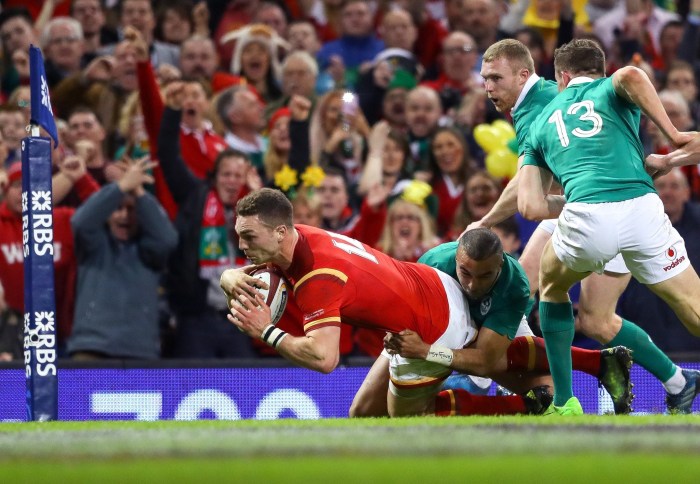
Having had a very public boot up the backside George North carried the ball like a man possessed. The wrecking ball on the right wing powered through green jerseys, constantly looked for work and was suitably rewarded with two tries. His first score was exactly the attacking play that Wales failed to convert against Scotland and in other games during the autumn. From the initial line break Rhys Webb ran an impressive support line to take the offload. Passing was then accurate and North plowed over to his clear relief. The second was an impressive example of simple ‘heads up’ rugby that took advantage of the extra man. Vitally important to efforts out wide were those up front with the back row battle proving to be a colossal contest. Warburton versus CJ Stander in particular was utterly engrossing to watch. Both must surely be Lions tourists in the summer. As the two flankers epitomised there was little between the sides and despite what the scoreline suggests this game could’ve gone either way.
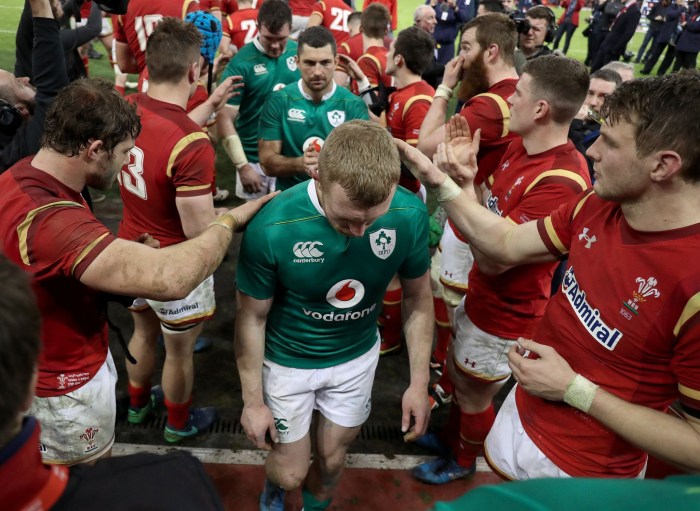
The turning point of the match was clearly when an Irish maul was marching towards the Welsh line only for Robbie Henshaw’s influence to cost his team a certain try. Henshaw clearly joined the maul ahead of Rory Best who had possession of the ball. It was an easy call for referee Wayne Barnes although Jon Davies did point it out for him too. It was a decision that came at a crucial time with the score at 15-9. Had the try been awarded Ireland would’ve had a conversion kick to go into the lead heading into the last ten minutes. Who knows what might’ve happened then. Instead Irish players heads went down as they seem to concede defeat with their chance blown. Jamie Roberts’ charge down third try sealed the deal.
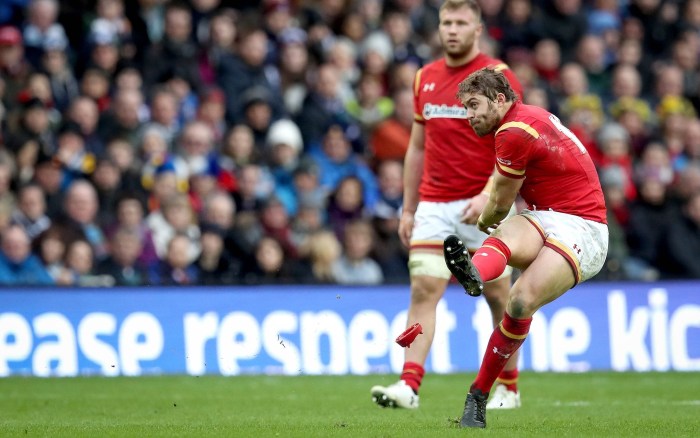
Whilst the win proves that Wales were simply a good team playing poorly, the future remains a concern. With few new caps and talent coming through, a World Cup challenge in 2019 will depend largely on this group of players. Inconsistency is the main worry with Wales capable of raising their game for big matches at home but not equalling those performances away from the home comforts of Cardiff. Even the reliable Leigh Halfpenny has slipped in his standards. He has missed shots at goal and hasn’t scored an international try for a very long time. Most startling have been some of the glaring handling errors made in the last two games that are very unlike the Halfpenny of 2013.
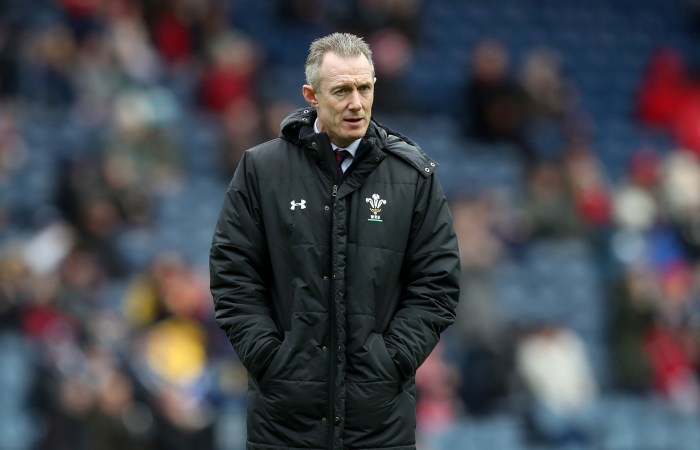
Although Wales gave their fans a positive victory that few predicted, none of them were willing to allow it to paper over the cracks. Preventing the men in red slipping out of the top 8 of the world rankings was a must. Another pool of death at the 2019 World Cup would’ve been a disaster. Victory also vindicated Rob Howley’s decision to keep the same team and resist the calls for change. However the public are still clamouring for consistency and an attacking game that will threaten the top teams. Effective as it was, last night’s performance would not have dampened the disquiet. If the team can deliver more scores akin to George North’s first, combine that attacking game with a disciplined defence and accurate set pieces then Wales can finally challenge New Zealand. This will require consistent results and not just single performances at home.
The final challenge of the Six Nations is a trip to Paris. Perhaps only then will we have a better idea if the Ireland win was a one-off regression to ‘Warrenball’ or a sign of genuine progression that will lead to better things.
It had been ten years since the Welsh rugby team had lost to their Scottish counterparts at international level. There were young children in the stands of Murrayfield who had never seen Scotland beat Wales. This all changed yesterday following a dismal second half performance from the men in red and confirmed that the Scottish resurgence seen against Ireland was not a mere flash in the pan. The result proved symbolic of a drastic change in fortunes. The Scots are thriving and full of confidence. Wales however are stagnant and devoid of ideas.
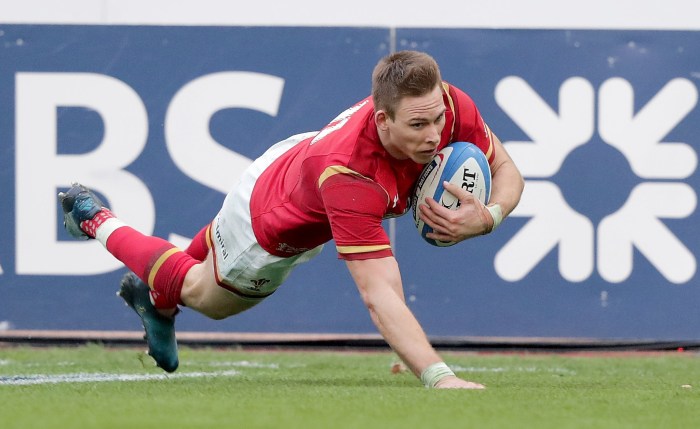
Scotland have been building nicely since the development of the talismanic Stuart Hogg. A few years ago he was a wild hot head who got himself sent off, left to watch on as Wales racked up the tries. Armed with this new found maturity, his pace and skill are now gaining Scotland tries instead. His ability to deliver a perfect pass in front of the receiver put Tim Visser over for the crucial match winning try. Wales proved their ability to deliver passes with Liam Williams’ try. That however was a rare highlight. All too often Welsh players were throwing unsympathetic offloads, leading to dropped balls and turnovers. This lack of skills is gravely concerning from professional players. Even Leigh Halfpenny dropped a seemingly safe ball 40 seconds into the second half that proved a sign of things to come.
It has been levelled at this Welsh team that they’ve spent too long in the gym and not enough time working on their skills. Rugby is so often a simple game where basic skills done well can heap rich rewards. The Welsh team have tried to address these issues with the blunt bludgeon of Jamie Roberts being replaced by the more composed distributor Scott Williams. A seemingly wise decision as Roberts came on and threw one particularly dreadful pass. In contrast Finn Russell and Hogg combined with two perfect passes to put Tim Visser over which made the Welsh defensive line look like they weren’t even there. However it’s not just the lack of skill from the Welsh players which is troubling, it’s the absence of attacking intelligence.
Wales were undone by dummy runners for Scotland’s first try by Tommy Seymour. This came with the tenth phase but yet the Scots still had the ability to deliver a backs move. Wales showed against England that they can pull off backs moves on first phase. But after one ruck Wales become horrendously predictable. One off runners. Side to side play. Waiting for a missed tackle or a back running against a forward rather than creating something themselves. As a defensive team you only need to match Wales’ physicality to contain them. Alex King came in recently after being deemed surplus to requirements at a Northampton team who were also misfiring. In the autumn it was Matt Sherratt but he’s gone back to Cardiff Blues. Yet with Rob Howley also supposedly a backs coach, a role he’ll be taking on for the Lions this summer, the Welsh team are simply not creating and crucially scoring tries. Two backs coaches and a talented backline however still cannot produce five pointers. This is not a new problem with Wales fans still bemused how they couldn’t score against 13 Wallabies in the World Cup. Scotland showed how it can be done and it won them the game.
Wales had chances with Rhys Webb notably close to a try. However even that had not been created by Wales but the scrum half instinctively reacting to a loose ball. Outside of that Wales coughed up the ball, threw wild inaccurate passes or were so predictable in their carrying that the Scots could target the ball and win turnovers. Wales did go for a try to take the lead, dismissing the chance to level the score but that decision itself gave a worrying glimpse of dissent in the camp.
Something is seriously wrong in the Welsh team when players start overruling their captain. John Lacey had already pointed at the posts so probably should’ve enforced Alun Wyn Jones’ decision. But the vocal Dan Biggar seemingly overruled and declared he was going for the corner. It proved an error as Wales messed up the formation of the maul and the chance was lost. The attitude of Biggar has been commented on before and once again referee Lacey had to have a word with him instructing him to keep his opinions to himself. Liam Williams is another one. Whilst you expect it from a scrum half, this football style of appealing for decisions has crept into the Welsh squad with players regularly flapping their arms calling for a decision. It’s as if they are hoping for the referee to bail them out of trouble. This is not only troubling from a disciplinary perspective but also casts doubt on Alun Wyn Jones’ ability to lead the team by being the dominant voice of authority.
Whilst Scotland now have a trip to Twickenham to challenge England for their title Wales will go another season without silverware. It’s four years since the 2013 championship, five by the time the next tournament rolls round next year. Have Wales developed since that epic 30-3 win? Clearly not.
With the exception of the front row the majority of the starting lineup and the coaching setup is largely the same. All the other home nations have improved. England are on a winning run, Ireland beat the All Blacks for the first time ever and Scotland have now defeated Wales for the first time in a decade. Those teams have progressed but Wales have stood still. Only major change can solve this problem. It needs to be both on and off the pitch. Wales go up against title chasing Ireland next then face a daunting trip to Paris against a hugely physical French team. Perhaps it will take two defeats in those games to trigger the long overdue reaction. We do however seem to have returned to an era where Wales players can beat Italy and raise their game for England but the rest are simply leaving us behind.
At a crucial point where rankings will dictate the 2019 World Cup draw, Wales’ decline is not only costing them this season but a future challenge at the ultimate prize.
The debut series of Class has now concluded its run on BBC One. The DVD and BluRay have also been available for a couple of weeks. It also still remains available on the BBC iPlayer for several more months. But is it any good?
Firstly I have to preface my comments with a note. I am not the demographic for this show. I am not the YA (Young Adult) section of the viewership who listens to Radio 1 and watches the new BBC3 regularly. However, I was attracted to this show because of an advertised appearance from Peter Capaldi’s Doctor in the opening episode. When The Doctor does arrive he takes the best lines regarding IKEA and Media Studies. But his inclusion in the first episode proved to be a double-edged sword.
For Tonight We Might Die
(C) BBC
This show supposedly explores what happens on Earth when the Time Lord is not around. So for him to turn up and save the day right at the start weakened the programme because it set an expectation. At any point in the remainder of the series, when things get tough and at their most perilous, The Doctor could legitimately just turn up and solve it all because we’ve seen him do that already. This therefore waters down the drama. Peter Capaldi’s appearance is therefore, an attempt to obtain legitimacy and acceptance. What it actually does is expose the inadequacies of the group. His assertion that they are well prepared for what is going to be thrown at them is simply false and gets underlined throughout the series. However, the opening episode had bigger issues than Peter Capaldi’s cameo.
A British version of an American show?
(C) BBC
The show centres around the “redeveloped” Coal Hill Academy. Whilst I initially considered this was a political comment on the Conservative Government’s interest in academics, it is actually an artistic direction to make the environment more American. Wide corridors with lockers on either side akin to a pop music video or any other show imported from the US. This strategy is made even more obvious with the action of the last act taking place at a Prom. Whilst the American invention of ‘the Prom’ has indeed made its way over the Atlantic Ocean, I didn’t expect for it to rear its head in a British TV show. Or at least not in the very first episode. But suddenly the reasoning became apparent.
Familiar themes
Towards the end of the episode, a list of comparisons is made, name checking ‘The Vampire Diaries’ for example. However it was the description of Coal Hill as the “Hellmouth” which triggered the epiphany. Class was trying to replicate the success of ‘Buffy the Vampire Slayer’. That particular American show was a cult classic for a generation growing up in the late 1900’s and early 2000’s. It also influenced the relaunched 2005 version of Doctor Who under Russell T Davies. So if you are going to aspire to match a show which has gone before then credit for aiming your sights at one of the best. Buffy aired from 1997-2003, nearly 20 years ago now. So whilst I have seen this sort of thing before there will be plenty of people who have not. Hopefully, this show will be the Buffy for a new audience, a new generation.
My expectations were of something new and fresh and exciting but I was left a little disappointed that there was a repackaging of ideas seen elsewhere. This also extended to some of the visuals. For example the “count the shadows” had similarities of the Vashta Nerada and the physical form of the Shadow Kin had more than an element of Pyroville from ‘The Fires of Pompeii’. As the opening of a brand new series, the episode was also heavily hampered by the need to explain the back story. An extended period was dedicated to explaining everything – where Miss Quill had come from, why they were in Shoreditch and why Quill couldn’t use her gun. There was no careful unravelling of the detail-heavy information it was just presented through an extended flashback. It is a difficult task to introduce all the characters and back story on a new show but it can be done and done well. For example in a previous Doctor Who spinoff.
The Torchwood spectre
The choice to release Class onto the iPlayer on the day that Torchwood celebrated its 10th Anniversary left a sour taste. It couldn’t possibly have been a coincidence. Torchwood’s debut episode carefully unravelled the truth behind the secret organisation without revealing everything all at once. There were glimpses into the personalities of the characters, which the viewer followed through Gwen Cooper, with flashbacks instead saved for Series 2. Class even borrows a concept from Torchwood; a rift in space and time. Where Torchwood succeeded was that the show felt new, fresh and different. The second episode for example, featured an alien gas which craved orgasmic energy. I’d certainly not seen anything like that before. With Class however, I feel like I’ve not only seen it before but seen it done better.
The Characters
(C) BBC
The combination of characters is generic but ticked all the boxes. There’s the athletic jock who, unsurprisingly, has a heart of gold. The odd one that turns out to not be of this planet. The smart one to provide the brains. The emotional heart of the group. This selection of individuals, who in reality would never become friends, covers all bases and appeals to everyone. Each viewer in the intended audience can empathise and connect with at least one of the group. Further statements are made regarding diversity. Ethnicity, sexuality and disability are all covered. Whilst I’d like to think that there is no need to make those statements these days sadly there is because not all shows are as diverse. Having a gay lead is a positive in some respects but equally disappointing because there is still a need to make that statement. This is simply a sad reflection of our society and television in general. But it is also a missed opportunity. Perhaps it would’ve been a stronger statement had Ram’s character, the macho, popular guy, been gay instead, particularly given the lack of footballers publicly acknowledging their sexuality.
(C) BBC
The most recognisable actor in the regular cast is Katherine Kelly who has plenty of moments for scenery chewing but her sarcastic character left a strong impression. A little over the top at times, Miss Quill does at least grab your attention even if her back story is a little bemusing. Her gun which also fires at the person holding it seemed rather confusing. It also raises another issue. Guns, even alien ones, have absolutely no place in schools and so should not be presented there. The first teaser image of Quill holding a gun in front of a blackboard is not the sort of thing that should be presented to an audience. Particularly in an Americanised environment where guns are a dangerous issue. Guns breed violence, something Class is not short of as it is.
The Coach with the Dragon Tattoo
(C) BBC
Torchwood was intended to be an adult show but yet Class seemed more graphically violent. The leg slicing in the first episode was very well achieved but particularly gory. Despite this, an attempt was made to attract younger viewers by including Capaldi in a programme easily accessible to younger audiences with no transmission regulations. The blood splatter too was unnecessary but a way of demonstrating that this show is not for kids. This would be repeated in the second episode which took the gore to another level. Human beings getting skinned alive by a dragon. Blood everywhere. It isn’t horrific, hence the DVD being given a 15 rating, but it is there and it is pretty gross. I also can’t recall what the point of it was in narrative terms. Or why the dragon became trapped on the coach’s skin. Or how, despite that, it could leave his body to feed. It seemed to just be there as a deterrent for younger viewers. Although the second episode will more likely be remembered for blood trickling down drains and skinned bodies being dragged across the floor, it is actually Ram who takes centre stage. Ram had to come to terms with the memory of seeing his girlfriend killed in front of him and, unlike most teenagers, the effects of a new alien leg. This sets the tone for what the success of the series really is; it’s characters.
Characters Dictate Structure
(C) BBC
Although the setting of Class is hampered by familiarity, it is the characters who are engaging and the real strength of the show. Nightvisiting continues the work of the previous episode with a focus this time on Tanya and her deceased father. Again there is a flawed premise with an alien tentacle able to open presumably locked windows from the outside. However it continues the decision to manoeuvre the characters so that they take the focus of the episodes. Although dark in tone, the dead visiting those left behind, themes of family and grief are not just explored through Tanya but also with the developing relationship between Charlie and Matteusz. Their intimacy is skilfully handled and cements the show in the modern world and hopefully encourages the rest of the media to frankly get on with it and catch up.
(C) BBC
A further backstory is also shared from April who then gets her moment under the spotlight for episode 4. That particular episode is perhaps most memorable for a post-sex scene between two of the Shadow Kin which is bizarre to say the least. The rest of the episode is a prolonged meander towards the next episode ‘Brave-ish Heart’ which verges on utter nonsense. It consists of scene after scene of extensive info dumping, more and more dialogue about genocide, and anyone who buys into April’s triumph over the King of the Shadow Kin is clearly more absorbed into the narrative than I was. For the kind and sweet girl to defy those instincts and magically acquire the ability to wield a pair of swords much less defeat an alien warrior king is far-fetched to say the least.
(C) BBC
The series is very precisely structured. Episode One, introduce everyone and everything. Two focuses on Ram. Three focuses on Tanya. Four focuses on April. Episode Five includes an examination of Charlie’s character, whilst there is plenty of other stuff going on at the same time. Charlie is perhaps the weakest of the group. Haunted by his position as Prince and keeper of souls, which also happens to be a dangerous weapon, leaves him largely spineless and unprepared. The formulaic strategy continued therefore with the main characters brought together in one classroom to analyse their relationships with each other. Of course being teenagers the truth hurts. Titled ‘Detained’, but frankly should’ve been called ‘Detention’, he really does step up with the final act of confession finally purging Charlie of his burden.
(C) BBC
Logically the penultimate installment of the series centred on Miss Quill. In between the impressive spacehopping there are quieter moments which draw real empathy and warmth for Quill, a tough task given she is frequently labelled a terrorist, a term that should not be tossed around lightly in our modern climate. Katherine Kelly is stellar in this episode however. She does plenty of over the top stuff but she can be equally steely as well as comedic when required. However once again two alien creatures are brought down to the level of the animalistic instincts of human beings for reasons that are beyond me. Anyway this leads us into the series finale.
The Finale
(C) BBC(C) BBC
Predictably the series’ only real villain the Shadow Kin returned for the finale. The continuing trend of explaining what is going on whilst Corakinus holds a sword over someone’s throat and Charlie points a weapon at him made me ponder how much screen time is actually dedicated to these scenes over the series. I might time it all one day. Also predictably, after an entire series of discussing it, the Cabinet of Souls is finally used by Charlie but not without further prolonged discussion about the ethics of the weapon. The fact that Series 1 only consisted of eight episodes clearly hampered the show. With little time for other stories to breathe the series effectively just told one story introduced in ‘For Tonight We Might Die’ and concluded in ‘The Lost’. The intervening episodes therefore became character pieces with no opportunity for unique stories to breathe within them. Compare the two images of Charlie holding the gun. The first is actually from the opening episode of the series whilst the second is from the finale. Over the course of eight episodes we have effectively returned to the same stand off where we started. The only exception is that The Doctor doesn’t turn up so Charlie has to use the Cabinet of Souls.
Whilst the journey makes for an enjoyable watch the elements introduced in ‘For Tonight We Might Die’, notably the Shadow Kin and the Cabinet of Souls, were obviously going to come together in ‘The Lost’. Despite the hampering of an Americanised environment and lack of a USP (Unique Selling Point), plus the unhelpful Capaldi cameo other elements such as the mysterious Governors did work exceptionally well and showed the programme’s potential. Similarly the show approached it’s intended young adult audience maturely with themes of acceptance, love and loss all sensitively and impressively well-handled. In those terms it should be seen as a shining example for other programmes to follow. Now all the introductory stuff is out of the way with Series 1, we know all the characters well enough now, the show has the potential to fly. To say that Series 1 ended on a cliffhanger is an understatement largely because it actually left viewers with two cliffhangers. But will there be any more?
Series 2?
Whilst Class was another positive production for BBC Wales’ drama studios in Cardiff it had an element of testing the water when it came to broadcast. It was the first major show to debut on the new BBC Three which was only available through the BBC iPlayer. Although receiving some promotion the programme was dependent on people at home seeking out the show at a time that suited them. As a result other more popular programmes dominated the iPlayer charts with the show failing to break into the Top 50 on demand shows meaning less than 185,000 people accessed the episodes. When the show did finally get a traditional broadcast slot on an actual channel it was buried by BBC One on a Monday night at 10.45pm. Worst still episodes were shown in pairs back to back. That meant that the second episode would finish in the early hours of Tuesday morning. Talk about not giving the show a fair chance at attracting to an audience! On BBC America Class will be screened after episodes of the next series of Doctor Who which although potentially odd to follow two series simultaneously does mean it will at least receive some prominence.
Unsurprisingly ratings on BBC One were poor. Worryingly the show actually posted viewing figures below the average for that timeslot. Of course it must be considered that the episodes had already been available for months prior on the iPlayer, stunting viewing figures further. Perhaps most telling is the fact that the most watched episode was the first but the show couldn’t retain or build on that audience. Consistently the second episode in the double bill lost half of the audience. Given that it began at 11.30pm this is probably not surprising. Much like the main show it seems that the BBC set it up for failure but at least it could be found at a consistent time every week. Perhaps it will be the broadcast of Class on BBC America which will seal the show’s future. Although flawed the series has undoubted potential and it’s true success or failure can only be measured within it’s intended YA audience.
Despite all the hyperbole in the build-up, the contest surpassed expectations. It was physical but had no incidents of the predicted yellow and red card avalanche foreseen before the tournament. Even more unexpectedly both teams actually threw the ball around and tried to score tries. It made for a classic encounter for two legendary foes.
There was so much to enjoy and discuss. Wales produced one of their best performances in the Six Nations for years and it was heartbreaking for them to lose it at the death. The effort from the forward pack was immense, matching and getting the edge on their English counterparts. Ross Moriarty stood out with some bone crushing hits, including a shot on Owen Farrell that was a bit late. Credit to the Englishman he didn’t make a fuss. Got his breath back and carried on with the game. Jake Ball, with a face full of stitches, carried hard. Ken Owens hit all his lineouts. The scrum was solid and unlucky on a few referee calls. Alun Wyn Jones, Warburton and Tipuric gave everything as usual with some particularly crucial turnovers. For England Dylan Hartley was entirely anonymous, his most recent ban costing him crucial match fitness. Launchbury and Lawes carried and tackled themselves into the ground whilst Clifford and Itoje engaged in a fascinating battle with the more experienced Welsh flankers. But yet for all the Welsh effort up front it was, as is often the case, the backs which proved the difference.
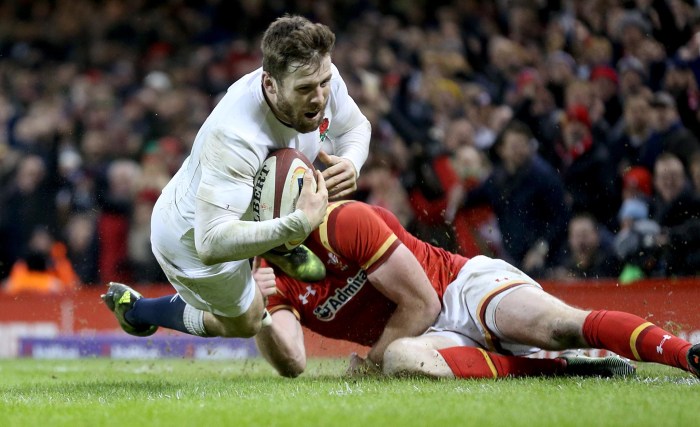
Whilst the Welsh backline crafted a stunning try from first phase for Liam Williams they failed to take the opportunity of strong territorial positions. England however were clinical. George Ford had been highlighted as a defensive weakness, his lack of stature made for easy yardage gains. However his ability to time a pass and put a player in a hole more than made up for those inadequacies. The game will of course will be remembered for the final moments as Elliot Daly scored to seal the win. Wales had defended heroically on their line twice during the second half. It was what they did after that which proved their undoing. Firstly, Dan Biggar’s interception and dash up field was undone with the freshly introduced Scott Baldwin botching the subsequent lineout throw. Similarly Jonathan Davies failed to find the touchline from a relieving kick at a time when Wales needed to regroup and reorganise at a set piece. This then exposed the unfortunate Alex Cuthbert.
Running alongside the debate over whether the stadium roof would be open or not was the saga concerning George North. Having suffered a dead leg in Rome, but still having the ability to run in a try from distance, North looked unlikely to make the England game. Whilst the Welsh coaching team were perfectly within their rights to name him in the team and pull him out an hour before kickoff it stank of the childish shenanigans which England coach Eddie Jones had predicted. Equally predictable was that Alex Cuthbert, North’s designated replacement, was going to have his head in his hands at some point against England. Unfortunately for Wales it occurred at the very end as his inability to get Daly into touch cost Wales a victory they deserved given their efforts.
It is hard not to feel sorry for Alex Cuthbert. He tries hard and when he makes an error he looks close to tears. For instance when he lost the ball in contact, coughing up possession at an important time. Unfortunately he lacks basic rugby nouse but with the ball he runs hard, fast and straight which during 2013 proved enough. But how often since then have we seen tries conceded in that corner of the pitch when he is on the field? They have been in crucial moments such as against South Africa in the Rugby World Cup, flapping high with his hands rather than dipping his shoulder in. Yesterday he got caught in field giving Daly the outside space to accelerate into and once again flapped high instead of going in forcefully and taking the Englishman’s feet into touch. The reality is that he should never have been put in that position, not just because Jon Davies should’ve put the ball out but because of staggering ineptitude from the Welsh management.
Cuthbert has been let down by his bosses. Short on confidence and desperate to just do something right he shouldn’t be continually thrust into the glare of international rugby where criticism and sadly abuse are sure to follow. He should be spared this by those responsible for picking the team. Despite what people say Wales were not short of other options. Stef Evans might’ve been a long shot to start such a big game but Sam Davies, Gareth Anscombe or Matthew Morgan, who scored a superb counterattacking try against Bristol recently, could’ve covered fullback and allowed Leigh Halfpenny to cover on the wing. However this lack of thought is highly indicative of a management team who seem to make substitutions based on the time on the match clock alone.
With Ross Moriarty and Ken Owens flying it was of the astonishment of most that they were withdrawn from the action. Whilst you can understand a desire to get consistently strong performer Talupe Faletau on the field it seemed an odd call to take Moriarty off when he was standing out as a man of the match contender. Similarly Gareth Davies coming on for the controlling influence of Rhys Webb smacked of a decision which ignored events on the field. Scott Baldwin’s immediate impact was to deliver an abysmal lineout throw which had it hit the right target could’ve helped Wales seal the game. Jamie Roberts came on for Scott Williams and was understandably not immediately up to the pace of the game which caused a defensive error. The mind boggles why Cory Hill came on for Tipuric with moments to go particularly given Warburton was apparently carrying an injury. Given the seemingly equally matched players on the field it was perhaps those in the stands that proved the difference. All of England’s replacements made a positive impact and improved their teams performance. Wales’ changes cost the team momentum and ultimately the match.
Also kick off times: why did the match kick off at the 16.50? What’s wrong with 5pm? Similarly why did Italy v Ireland have a start time of 14.25? Dictated by television coverage no doubt.
One of my biggest gripes about Batman Vs Superman was the movie’s very existence. I questioned what the point of it was. Rogue One however is the complete reverse. The fact that it has been created is extraordinary. It is a film that explains an important plot point in a different movie that was premiered forty years ago now. It didn’t need to be made. The Star Wars saga existed comfortably before and after Rogue One was released. But yet it provides an engaging, thoroughly enjoyable and visually impressive Star Wars film that comfortably sits alongside those which have come before and those still to follow.
Spoiler Warning! Details will be discussed that will hamper viewer enjoyment for those yet not to see it.
Unlike other simplistic ‘cash-in’ movies within franchises, incredible thought and effort has gone into delivering Rogue One. For instance, I was astonished that Peter Cushing was in it. And in it a lot! So much so that I doubted he was actually dead. Post cinema visit I had to check and yes the legendary actor, who also played Doctor Who on the big screen, passed away in 1994. There are also a number of other cameos. One is delightfully amusing and brief. Another is chilling and full of grandeur. In fact all of the sequences featuring Darth Vader are very impressive, from the horrific realities of his injuries to an astonishing ass kicking rampage which will make a whole new generation fear him. The final surprise appearance however is utterly heartbreaking given recent news but did distract me from the slightly dodgy rendering to achieve the effect of youthfulness. None of these cameos overshadow the piece and just added to the ‘this is for you fans’ joyousness.
Overall, Rogue One is a bit bland compared to other entires in the Star Wars mythos. This is largely because the audience is obviously less invested in newer characters that are introduced for this movie. However all of these individuals are delivered well. They are unique and have suitable personalities that carry the viewer along with the story. Felicity Jones and Diego Luna were both excellent and actually the fact that they were new characters allowed for the unexpected moment when they were actually killed off. This twist added a refreshing change for Star Wars and particularly for a Disney movie!
Rogue One also finally brought the ‘war’ element to Star Wars. In addition to the spectacularly well delivered battle sequences and the fighting on the beaches, the film also creates the scale of a universal conflict. This made the planet hopping of the first act less tedious and more necessary. Another interesting direction saw the rebels presented as not simple moral crusaders. Instead it is alluded to some of the more horrific acts of being at war that these fighters have had to do. The reality of lead characters not making it out alive against the impossible odds also made for a welcome change. Sacrifices being made in this movie also made you appreciate the small battles that need to be traversed for later, more memorable victories. Time to dig out ‘A New Hope’ I think!
How many more times are we going to go through this? Another Autumn series gets underway with a defeat to one of the Southern Hemisphere giants. However it was the manner of this defeat which was so galling. If anyone is looking to take positives from that performance then they are frankly deluded. Wales should be ashamed of that first half performance. Utterly ashamed. There were moments when Australia were simply executing plays as if they were going through a training session. The Wallabies have probably had more intense training opponents than the limp resistance which Wales offered.
Statistics can too often be used to prove anything. But the facts are the facts and for Wales they make for grim reading. Wales have not won the opening match of the autumn since they defeated Romania in 2002. Stop playing the big boys. You are wasting everyone’s time and are just after our money. Wales under the Gatland/Edwards/Howley regime, installed 8 years ago now, have claimed 1 victory over Australia and another over South Africa in 2014. Add the All Blacks to the stats and that means 2 victories in 32 matches. A win percentage of 6.25%. If insanity is the repetition of events expecting different results then we are well beyond that point by now. I for one am sick of the excuses. They are being trotted out on such a regular basis that they have now become cliches. Classics such as, “we need to test ourselves against the best teams to learn” and “we always start slowly and get better the longer we are together” would be more appropriately used as the tag lines by the WRU marketing department.
Further blame is directed on the suitability of the Pro12 to prepare our players. Firstly, not all of the starting lineup, North, Roberts, Halfpenny and Charteris for instance, play in the Pro12. Secondly, anyone fortunate enough to see Ireland’s performance against the All Blacks, mere hours after Wales’ debacle, saw that argument evaporate for ever. The Welsh players and coaching team are comfortable in their malaise. Their press conference responses are prepared repetitions of those that have gone before. Oddly the Ireland v New Zealand clash took place in Chicago, USA. Therefore the Irish had to deal with the rigours of transatlantic travel. But yet the Irish players raised their game to levels unreached in 111 years. They played at pace and with an intensity and aggression which pressured the All Blacks throughout. Wales took a bus down the M4. They fell off tackles and looked so bewildered you would’ve thought that they were the team suffering jet lag.
From their first lineout Australia flowed over the gainline and did not yield that momentum. Many fans were left bewildered by the selection of Alex Cuthbert for yesterday’s game. Wales attempted to trick the Wallabies by putting him on the left wing, rather than the right. But the smart green and golds targeted him immediately. A series of cross and box kicks exposed him early on, allowing Australia to regain the ball. This resulted in the extraordinary 80% possession statistics. Any youngsters wishing to watch a textbook control of a match then this was the game.
Fortunately for Wales the Wallabies did butcher a number of opportunities to rack up points. Dropped passes but also 11 points missed at goal. So it could, and frankly should, have been worse. Conceding 32 tries in the last 6 matches is as bad as it gets. Shaun Edwards’ reputation is in tatters. No longer can he justify his position based on the 2 tries conceded during the 2008 Grand Slam season. Astonishingly Wales didn’t leak a try when reduced to 14 men. But the way that they were sliced apart with a full complement, with basic passing skills largely, was truly worrying. The ‘up and under’ kicking strategy also reared its head again as the ball was gifted to the dangerous Israel Folau on numerous occasions.
I thought Ross Moriarty carried the ball well. Scott Williams’ try also demonstrated that when players play what is in front of them and back themselves they can do good things. But once again Wales’ inability to convert overlaps with the line at their mercy is staggering from supposedly “professional” rugby players.
The danger now is that the Welsh public are on the verge of abandoning this team of under-performers. As a result there were nearly 20,000 empty seats in the stadium, not helped by the £60+ price tag. In contrast Wales’ footballing counterparts are delivering on the field. Next weekend they play Serbia in a World Cup qualifier. It is no wonder therefore that tickets for the Argentina rugby clash are so freely available. We are talking tickets for £20 now. Those are still available but the Welsh public isn’t interested. This is a shame because Argentina are playing some superb rugby this year. They took apart Ireland at the World Cup last year and are threatening to do the same to Wales. Short of some drastic changes both on and off the field Wales are in real danger of slipping out of the top 8 in the World Rugby rankings. Just in time for Rugby World Cup seedings once again!
In perhaps the most poorly kept secret in rugby history, Warren Gatland has officially been unveiled as the Head Coach of the 2017 British and Irish Lions Tour to New Zealand. Everyone had predicted it. Gatland had also been spotted in Edinburgh and was also snapped posing for photographs in the Lions polo shirt. So there was to be no shocking surprise and Gats is the man.
Now Warren Gatland is of course an outstanding candidate for the role. In 2009 he toured South Africa as part of the coaching staff under the leadership of Lions legend Sir Ian McGeechan. Although that Test series ended in defeat, it did manage to reignite the brand. Four years previously the disastrous New Zealand tour had brought into question the team’s place in the modern game. Victory under Gatland against Australia in 2013, the team’s first victory in a Test series since 1997, made the challenge credible and not just a futile financial undertaking.
However the challenge of defeating the All Blacks is an intimidating one. The Lions have only ever won a test against New Zealand once way back in 1971. They are consistently the best team in world rugby, reigning back-to-back world champions and with a phenomenal won/lost record. On top of that the Lions have a daunting series of matches against New Zealand’s five super rugby teams, plus the Maori’s and a provincial XV.
Warren Gatland’s recent record as Head Coach of Wales is a concern. Whilst other teams have developed Wales have stagnated, failing to win the Six Nations since 2013. This past summer Gatland was left embarrassed as his hometown team the Waikato Chiefs beat his Wales squad. It will be fascinating to find out who will be selected to join the coaching lineup.
There can be no doubt however that even in the early stages of the rugby season the Lions looms large on the horizon. I’m just hoping that at the end of a long season we still have enough players left to take on the All Blacks.
Australian rugby union is in a bit of a crisis. The Wallabies have lost the last six in a row. Three against England and three against the All Blacks. As a neutral observer I am simply astounded by the way in which they have constructed a defensive formation in an attempt to hide their frailties. The selection of Quade Cooper caused a few raised eyebrows this week but given the poor showing in Sydney there wasn’t really much more to lose. However, this selection of a mercurial talent with ball in hand is also one of a defensive liability. For a number of years the Wallabies have attempted to hide Cooper from the firing line and that strategy continued yesterday. Unfortunately this means that their defensive system from first phase is a mishmash of players out of position with no leadership and limited structure.
Let’s start with New Zealand’s first try. Bernard Foley, the inside centre is defending blindside wing with scrum half Will Genia. Back rowers Hooper and Pocock are out defending in the 10 channel. Outside them left winger Adam Ashley-Cooper is with Kerevi the outside centre and right winger Haylett-Petty is at an outside centre position. Israel Folau is then on the wing with Quade Cooper covering fullback.
Even if this is all intended they are then undone by individuals flying up and missing tackles. Hooper puts pressure on Barrett successfully but in the very next phase Stephen Moore flies out of the line and takes the wrong man giving tighthead prop Franks a gap to run into. The try is then finished off with simple hands and a massive overlap.
The All Blacks’ second try is fairly similar, scoring from another maul formed at the lineout. Adam Ashley-Cooper (14) has had to go off so new cap Hodge (23) was now left defending at outside half with Kerevi (13) and Haylett-Petty (11) outside with Folau again on the wing. Unfortunately these players get sucked in because Beauden Barrett was not first receiver and looped around.
Although as Michael Lynagh identified in the UK coverage there was a suspicion of a trip to Kerevi, who ended up on the turf, the green and gold jerseys were just flapping at All Black shirts. This was summed up perfectly by a covering Quade Cooper’s traditional turnstile-tackling technique.
The third try is really obvious. With Quade Cooper having dropped back defending the blindside wing, Aaron Smith targets him with a box kick. Dagg easily beats him to the ball and New Zealand have possession, field position and momentum. Beauden Barrett’s exquisite pass to put Ben Smith outside the defending Haylett-Petty to create the overlap however was the icing on the cake.
New Zealand’s fourth try was again from first phase possession that exposed the Australian defensive arrangement. Once again Hodge, Kerevi, Haylett-Petty and Folau provide the defensive line with back rowers Hooper and Pocock providing further cover closer to the maul. Things are not helped with a missed tackle on Ben Smith which makes the try an inevitability. Even when Smith is brought down there is no other last ditch tackling with Quade Cooper again clutching at thin air and failing to prevent Aaron Smith getting the ball away, leaving Folau with an impossible job of keeping out Sam Cane.
These defensive frailties result in Pocock and Hooper’s skills of competing at the breakdown to be negated as they spend more of their time making tackles for others in the team. Quade Cooper and Bernard Foley had such little possession to work with given the Australian lineout was again being picked off that it made their presence on the field more problematic than beneficial. For instance, Cooper is thought to have made just 2m for his four carries. Surely Cheika’s gamble on selecting him backfired big time.
Summerslam is WWE’s second biggest show of the year and the first proper Pay Per View (PPV) since the brand split. Both Raw and Smackdown were able to build and present their matches for the ‘biggest party of the summer’. The only exception to this was the main event which featured Brock Lesnar of Raw and Randy Orton of Smackdown.
The matchup had been promoted for many weeks, built as a match 15 years in the making. Unlike the main event of UFC 202 the previous night, this contest failed to live up to the hype. With the exception of an RKO on the announce table, Lesnar physically dominated and abused a 12 time world champion. Now this is not unheard of, a similar fate was endured by 15 time world champion John Cena a few years ago. However with Cena seemingly taking time away from WWE, the destruction of Orton belittled Smackdown’s only other marquee star. With the Miz holding the Intercontinental title and Dolph Ziggler falling short once again, the blue brand surely needs to push AJ Styles to the top-level and challenging for the WWE title to give their top prize credibility.
Anyway, back to Lesnar v Orton. The conclusion of the match was shocking and unexpected, even to long-term fans. There was no escaping the obvious. Lesnar caught Orton with an elbow to the head which split him open hard. If that was indeed the intended finish then it was a bold move. Since the move to the TV-PG rating WWE’s output has been significantly watered down with blood loss an obvious absentee. So for the main event on the second biggest show of the year to be stopped in this manner was unexpected to say the least. It was quite grizzly too as Orton clutched his head and when eventually Lesnar was pulled off the third generation superstar he was prone in a pool of his own blood. To complete the finale a F5 was delivered to Smackdown Commissioner Shane McMahon, which will inevitably lead to a storyline suspension. Brock Lesnar’s limited dates contract means that he’ll have some time off, possibly get in another UFC bout and return around Royal Rumble for Wrestlemania season. As a result, this main event achieved nothing whatsoever other than a mildly entertaining watch. Like the majority of Summerslam it was therefore a disappointment.
With the exception of the AJ Styles and John Cena match, which was spectacular, the rest of the card could be described as average at best. Sasha Banks failed to defend her women’s title as a back injury necessitated her dropping the strap back to Charlotte. During the match Banks took a nasty looking bump off the turnbuckle which could easily have broken her neck. It’s no wonder she’s injured her back based on that evidence. None of the other championship matches were much to write home about. One of them didn’t even happen as Rusev and Roman Reigns brawled without actually having a match, robbing those who had bought the event on PPV of seeing another title up for grabs. A new addition to the Championship scene also debuted at Summerslam as the Universal Championship belt was unveiled.
This new title is not just ridiculous sounding, a champion of the entire universe, but now also looks terrible. It is so odd that the current Intercontinental title belt is an old version but at least it has a unique look to it. Now the WWE World, WWE Universal and WWE Women’s championships are almost identical with the only major differentiation being the colouring of the strap. I don’t have a problem with the consistent design but the red leather ruins it for me. What is more important however, and has rightly been pointed out by Mick Foley online, is that two competitors at the top of their game put on a good match for it.
Although good the match was a little disappointing, there’s no getting around that. The first time Finn Balor and Seth Rollins had met in the ring was hoped to have had instant chemistry but although exciting and entertaining it just lacked a little something. As it has turned out Finn Balor suffered a shoulder injury early on and incredibly popped the dislocated joint back in within seconds. However, this did not seem to hamper his performance. The capacity crowd also seemed more concerned with voicing their displeasure to the appearance of the new belt than following the action in the ring which killed the atmosphere. The moment that Balor won the title should’ve been met with a deafeningly positive reaction. Sadly that reaction was absent. I had concluded that the PPV debut of the Demon couldn’t possibly end in failure. Perhaps the crowd had also reached this verdict. It set things up nicely for a series of Rollins/Balor classics as Seth fails to overcome the Demon, elevating the myth of this dark side of Finn Balor. Depressingly we have now been denied this feud as news broke that Finn would be spending months on the sidelines following surgery.
On Raw just 24 hours after winning the title, Finn Balor relinquished it, causing the intended plan for the next few weeks to be ripped up and a hastily arranged series of matches worked out to crown a new champion. I am a big fan of Seth Rollins. Like most of the WWE Universe I am keen to cheer him despite his persistent heel character. But his buckle/throw powerbomb has not only caused the neck injury that retired Sting but has also embarrassed the WWE by injuring one of the company’s most exciting new talents. The curb stomp was replaced by the Pedigree as that was deemed too violent a move and surely now the buckle bomb has to be culled too.
Following three nights in a row at the Barclays Centre in Brooklyn there needs to be a time for reflection. Both rosters need to scramble together and analyse who is left without suspension. As discussed injuries have also struck with even Samoa Joe breaking his jaw at NXT Takeover Brooklyn II. The Dudley Boyz have retired too. But such is the fast paced turn around of the business the show must go on. Bayley made her debut on Raw. Nicki Bella is back and thought to be joining Smackdown. The blue brand will also now start building for their Backlash PPV which starts with Smackdown Live tonight…
Update: Smackdown Live
Opening the show it was announced that the blue brand would have new tag team and women’s titles to be crowned at the Backlash PPV. Continuing the pattern identified by WWE the new belts match the current ones on the Raw brand but with a change to the colours, incorporating the blue of Smackdown. Personally I prefer the blue, particularly on the silver penny tag title design.
The episode saw Nicki Bella get beaten up by Carmella, more Heath Slater related irritating comedy and set up an intriguing encounter between Randy Orton and Bray Wyatt. There was also the implication that a Shane McMahon v Brock Lesnar stunt match could be on the cards. I also noticed that David Otunga said during commentary, on two separate and unrelated occasions, that “desperate times call for desperate measures”. Otunga is like a confused and bewildered pensioner. Spouting total nonsense. Yet Jerry Lawler is reduced to pre-show duty.
As I hoped AJ Styles was rewarded for his Summerslam performance with a title match. He also proved his worth by defeating Dolph Ziggler in the show’s main event. Styles will now challenge Dean Ambrose for the WWE World Championship at Backlash. Perhaps by then that title belt might have got a blue updated strap.
As the 31st Olympic Games drew to a close in Rio de Janeiro it is time to reflect on the latest instalment of the so-called ‘Greatest Show on Earth’. Prior to the event the International Olympic Committee (IOC) and the IAAF faced their biggest crisis in recent memory. The host country itself had safety concerns with the spread of the Zika virus and faced questions regarding financing and the water quality in Guanabara Bay. Yet despite all these issues the competitive action has spoken for itself, providing gripping tension, explosive excitement and unforgettable moments.
With the Games fast approaching an investigation found state sponsored doping in Russia bringing into doubt their participation. Despite the findings, the IOC refused to grab the opportunity and impose a blanket ban on all Russian athletes, a mistake the IPC did not make. Instead individual sport’s governing bodies would make the decision regarding Russian participants. As a result Russia acquired a total of 56 medals, placing them fourth in the medal table. It is impossible not to ponder the legitimacy of these medals. Russian athletes are having samples retested and are being stripped of medals from Beijing 2008 and recently shot putter Evgeniia Kolodko lost her London 2012 silver medal. Those elevated to receive medals long after the event have been robbed of their moment to stand on the podium and see their national flag raised for them. Drug cheats ruin it for everyone. Justin Gatlin’s failure to reach the 200m final felt like justice but he leaves Rio having taken silver in the 100m. He has been banned not once but twice for doping offences but is still allowed to compete. If the Lance Armstrong saga proved anything it is that dopers are often ahead of the testers. The presence of Gatlin and Russian athletes jeopardises the sport and unfortunately with the golden poster boy from Jamaica appearing for the final time this process of spectator apathy could be accelerated.
Usain Bolt is now unquestionably a legend. The triple treble of gold medals in the 100m, 200m and 4x100m relay is a feat which is incredibly unlikely to be bettered. He is not just a phenomenal athlete but the humblest of men. Bolt is a showman. Box office. A man that transcends athletics. His record at the Olympics is unheard of but all achieved without anything other than natural ability, most notably his stride length. It is no coincidence that when he was competing the stadiums were at their fullest. Unfortunately not all events were as well populated by spectators.
REUTERS/Ivan Alvarado
One of the most disappointing aspects of Rio 2016 were the numbers of empty seats at events. The reality of hosting the Games in a country gripped by rampant poverty, plus the enormous geographical difficulties resulted in the poor ticket sales. In contrast, London 2012 saw millions of tickets for every event fail to match demand. Brazil had also hosted the FIFA World Cup only two years earlier and with the threat of the Zika virus deterring potential visitors further, some of the biggest successes were played out against a background of empty seats.
One of the most exciting events in the early stages of the Olympics was the Rugby 7s tournament. Rugby Union had not been included in the Olympic Games since 1924 and in that 92 year gap the seven aside game had become the perfect competition to complete inside three days. The combination of 14 minute matches, incredibly fast athletes and stunning tries made for two riveting tournament for the medals. Few are likely to forget the tension of Team GB’s epic quarter final battle with Argentina, Japan defeating New Zealand, the Australian women overcoming their trans-Tasman rivals or Fiji’s offloading masterclass to seal their own historic gold medal triumph. Team GB’s women fell short in the final stages, failing to claim a bronze medal but the Men’s team, brought together over the summer, did take away a spectacular silver. This would prove to be just one of a record haul of medals for Team GB.
After the incredible achievements of Team GB at London 2012 few imagined that it could be matched, especially without the backing of home support. But yet Team GB managed to not only match but then to exceed all expectations. Their 67 medals edged the 65 achieved in 2012. 27 golds also placed GB second in the medal table, delivering a bloody nose to traditional powerhouse China. In a number of interviews athletes praised the contribution that funding from the National Lottery has made. In the brutal reality of medals equal funding, performances like this prove that the strategy works. It was only 20 years ago that Team GB left Atlanta with only a solitary gold medal. The transformation is astonishing. Not only have the athletes themselves savoured their moment of glory but thousands of miles away so did the British public.
Despite the time difference millions watched on as incredible moments became etched in history as Mo Farrah, Jade Jones, Andy Murray and Nicola Adams retained their titles. Those were just a few of our stars but contributions came from a wide variety of sports. Team GB picked up medals in the Velodrome, on the athletics track, on water, in the water, in the boxing ring and at the Gymnastics. That isn’t even a comprehensive list. The gripping elation of the penalty shootout victory for the women’s hockey team no doubt provided the highlight to many people’s Friday night. For me the most emotional gold medal victories came for Charlotte Dujardin and her legendary horse Vallegro, in his last competition, and Nick Skelton. At his seventh Olympic Games the 58 year old won individual showjumping gold after a tense six-way jump off. Stood on the podium the emotion took hold and the man who once retired after breaking his neck finally had his well-deserved moment.
Whilst for many in Great Britain London 2012 will forever be the greatest Olympic games ever, without doubt Rio 2016 has been the greatest for our athletes. Team GB exceeded expectations and proved that our small island is still a country to be reckoned with in sporting competition. In Tokyo in 2020, anything could be possible…



 It had been ten years since the Welsh rugby team had lost to their Scottish counterparts at international level. There were young children in the stands of Murrayfield who had never seen Scotland beat Wales. This all changed yesterday following a dismal second half performance from the men in red and confirmed that the Scottish resurgence seen against Ireland was not a mere flash in the pan. The result proved symbolic of a drastic change in fortunes. The Scots are thriving and full of confidence. Wales however are stagnant and devoid of ideas.
 It has been levelled at this Welsh team that they’ve spent too long in the gym and not enough time working on their skills. Rugby is so often a simple game where basic skills done well can heap rich rewards. The Welsh team have tried to address these issues with the blunt bludgeon of Jamie Roberts being replaced by the more composed distributor Scott Williams. A seemingly wise decision as Roberts came on and threw one particularly dreadful pass. In contrast Finn Russell and Hogg combined with two perfect passes to put Tim Visser over which made the Welsh defensive line look like they weren’t even there. However it’s not just the lack of skill from the Welsh players which is troubling, it’s the absence of attacking intelligence.
 Wales were undone by dummy runners for Scotland’s first try by Tommy Seymour. This came with the tenth phase but yet the Scots still had the ability to deliver a backs move. Wales showed against England that they can pull off backs moves on first phase. But after one ruck Wales become horrendously predictable. One off runners. Side to side play. Waiting for a missed tackle or a back running against a forward rather than creating something themselves. As a defensive team you only need to match Wales’ physicality to contain them. Alex King came in recently after being deemed surplus to requirements at a Northampton team who were also misfiring. In the autumn it was Matt Sherratt but he’s gone back to Cardiff Blues. Yet with Rob Howley also supposedly a backs coach, a role he’ll be taking on for the Lions this summer, the Welsh team are simply not creating and crucially scoring tries. Two backs coaches and a talented backline however still cannot produce five pointers. This is not a new problem with Wales fans still bemused how they couldn’t score against 13 Wallabies in the World Cup. Scotland showed how it can be done and it won them the game.
 Wales had chances with Rhys Webb notably close to a try. However even that had not been created by Wales but the scrum half instinctively reacting to a loose ball. Outside of that Wales coughed up the ball, threw wild inaccurate passes or were so predictable in their carrying that the Scots could target the ball and win turnovers. Wales did go for a try to take the lead, dismissing the chance to level the score but that decision itself gave a worrying glimpse of dissent in the camp.
 With the exception of the front row the majority of the starting lineup and the coaching setup is largely the same. All the other home nations have improved. England are on a winning run, Ireland beat the All Blacks for the first time ever and Scotland have now defeated Wales for the first time in a decade. Those teams have progressed but Wales have stood still. Only major change can solve this problem. It needs to be both on and off the pitch. Wales go up against title chasing Ireland next then face a daunting trip to Paris against a hugely physical French team. Perhaps it will take two defeats in those games to trigger the long overdue reaction. We do however seem to have returned to an era where Wales players can beat Italy and raise their game for England but the rest are simply leaving us behind.
 The debut series of Class has now concluded its run on BBC One. The DVD and BluRay have also been available for a couple of weeks. It also still remains available on the BBC iPlayer for several more months. But is it any good?







 Whilst Class was another positive production for BBC Wales’ drama studios in Cardiff it had an element of testing the water when it came to broadcast. It was the first major show to debut on the new BBC Three which was only available through the BBC iPlayer. Although receiving some promotion the programme was dependent on people at home seeking out the show at a time that suited them. As a result other more popular programmes dominated the iPlayer charts with the show failing to break into the Top 50 on demand shows meaning less than 185,000 people accessed the episodes. When the show did finally get a traditional broadcast slot on an actual channel it was buried by BBC One on a Monday night at 10.45pm. Worst still episodes were shown in pairs back to back. That meant that the second episode would finish in the early hours of Tuesday morning. Talk about not giving the show a fair chance at attracting to an audience! On BBC America Class will be screened after episodes of the next series of Doctor Who which although potentially odd to follow two series simultaneously does mean it will at least receive some prominence.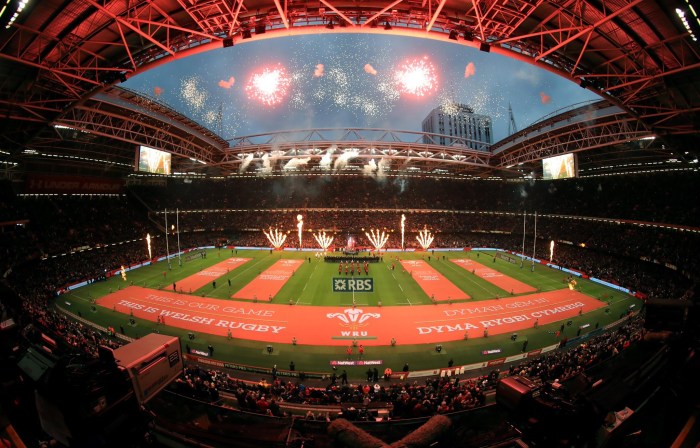
 There was so much to enjoy and discuss. Wales produced one of their best performances in the Six Nations for years and it was heartbreaking for them to lose it at the death. The effort from the forward pack was immense, matching and getting the edge on their English counterparts. Ross Moriarty stood out with some bone crushing hits, including a shot on Owen Farrell that was a bit late. Credit to the Englishman he didn’t make a fuss. Got his breath back and carried on with the game. Jake Ball, with a face full of stitches, carried hard. Ken Owens hit all his lineouts. The scrum was solid and unlucky on a few referee calls. Alun Wyn Jones, Warburton and Tipuric gave everything as usual with some particularly crucial turnovers. For England Dylan Hartley was entirely anonymous, his most recent ban costing him crucial match fitness. Launchbury and Lawes carried and tackled themselves into the ground whilst Clifford and Itoje engaged in a fascinating battle with the more experienced Welsh flankers. But yet for all the Welsh effort up front it was, as is often the case, the backs which proved the difference.
 Whilst the Welsh backline crafted a stunning try from first phase for Liam Williams they failed to take the opportunity of strong territorial positions. England however were clinical. George Ford had been highlighted as a defensive weakness, his lack of stature made for easy yardage gains. However his ability to time a pass and put a player in a hole more than made up for those inadequacies. The game will of course will be remembered for the final moments as Elliot Daly scored to seal the win. Wales had defended heroically on their line twice during the second half. It was what they did after that which proved their undoing. Firstly, Dan Biggar’s interception and dash up field was undone with the freshly introduced Scott Baldwin botching the subsequent lineout throw. Similarly Jonathan Davies failed to find the touchline from a relieving kick at a time when Wales needed to regroup and reorganise at a set piece. This then exposed the unfortunate Alex Cuthbert.
 Running alongside the debate over whether the stadium roof would be open or not was the saga concerning George North. Having suffered a dead leg in Rome, but still having the ability to run in a try from distance, North looked unlikely to make the England game. Whilst the Welsh coaching team were perfectly within their rights to name him in the team and pull him out an hour before kickoff it stank of the childish shenanigans which England coach Eddie Jones had predicted. Equally predictable was that Alex Cuthbert, North’s designated replacement, was going to have his head in his hands at some point against England. Unfortunately for Wales it occurred at the very end as his inability to get Daly into touch cost Wales a victory they deserved given their efforts.
 Cuthbert has been let down by his bosses. Short on confidence and desperate to just do something right he shouldn’t be continually thrust into the glare of international rugby where criticism and sadly abuse are sure to follow. He should be spared this by those responsible for picking the team. Despite what people say Wales were not short of other options. Stef Evans might’ve been a long shot to start such a big game but Sam Davies, Gareth Anscombe or Matthew Morgan, who scored a superb counterattacking try against Bristol recently, could’ve covered fullback and allowed Leigh Halfpenny to cover on the wing. However this lack of thought is highly indicative of a management team who seem to make substitutions based on the time on the match clock alone.

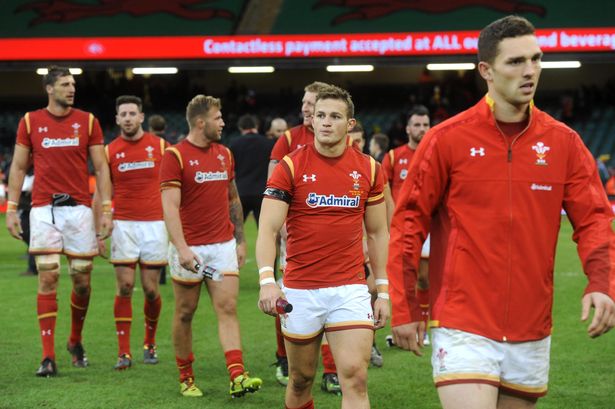 How many more times are we going to go through this? Another Autumn series gets underway with a defeat to one of the Southern Hemisphere giants. However it was the manner of this defeat which was so galling. If anyone is looking to take positives from that performance then they are frankly deluded. Wales should be ashamed of that first half performance. Utterly ashamed. There were moments when Australia were simply executing plays as if they were going through a training session. The Wallabies have probably had more intense training opponents than the limp resistance which Wales offered.
 Statistics can too often be used to prove anything. But the facts are the facts and for Wales they make for grim reading. Wales have not won the opening match of the autumn since they defeated Romania in 2002. Stop playing the big boys. You are wasting everyone’s time and are just after our money. Wales under the Gatland/Edwards/Howley regime, installed 8 years ago now, have claimed 1 victory over Australia and another over South Africa in 2014. Add the All Blacks to the stats and that means 2 victories in 32 matches. A win percentage of 6.25%. If insanity is the repetition of events expecting different results then we are well beyond that point by now. I for one am sick of the excuses. They are being trotted out on such a regular basis that they have now become cliches. Classics such as, “we need to test ourselves against the best teams to learn” and “we always start slowly and get better the longer we are together” would be more appropriately used as the tag lines by the WRU marketing department.
 From their first lineout Australia flowed over the gainline and did not yield that momentum. Many fans were left bewildered by the selection of Alex Cuthbert for yesterday’s game. Wales attempted to trick the Wallabies by putting him on the left wing, rather than the right. But the smart green and golds targeted him immediately. A series of cross and box kicks exposed him early on, allowing Australia to regain the ball. This resulted in the extraordinary 80% possession statistics. Any youngsters wishing to watch a textbook control of a match then this was the game.
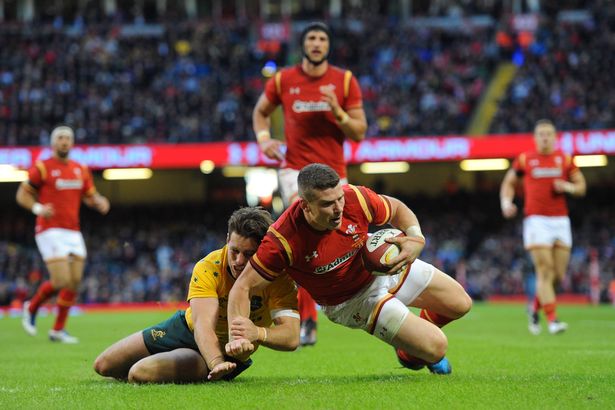 I thought Ross Moriarty carried the ball well. Scott Williams’ try also demonstrated that when players play what is in front of them and back themselves they can do good things. But once again Wales’ inability to convert overlaps with the line at their mercy is staggering from supposedly “professional” rugby players.
 The danger now is that the Welsh public are on the verge of abandoning this team of under-performers. As a result there were nearly 20,000 empty seats in the stadium, not helped by the £60+ price tag. In contrast Wales’ footballing counterparts are delivering on the field. Next weekend they play Serbia in a World Cup qualifier. It is no wonder therefore that tickets for the Argentina rugby clash are so freely available. We are talking tickets for £20 now. Those are still available but the Welsh public isn’t interested. This is a shame because Argentina are playing some superb rugby this year. They took apart Ireland at the World Cup last year and are threatening to do the same to Wales. Short of some drastic changes both on and off the field Wales are in real danger of slipping out of the top 8 in the World Rugby rankings. Just in time for Rugby World Cup seedings once again!
 However the challenge of defeating the All Blacks is an intimidating one. The Lions have only ever won a test against New Zealand once way back in 1971. They are consistently the best team in world rugby, reigning back-to-back world champions and with a phenomenal won/lost record. On top of that the Lions have a daunting series of matches against New Zealand’s five super rugby teams, plus the Maori’s and a provincial XV.


 Summerslam is WWE’s second biggest show of the year and the first proper Pay Per View (PPV) since the brand split. Both Raw and Smackdown were able to build and present their matches for the ‘biggest party of the summer’. The only exception to this was the main event which featured Brock Lesnar of Raw and Randy Orton of Smackdown.
 Anyway, back to Lesnar v Orton. The conclusion of the match was shocking and unexpected, even to long-term fans. There was no escaping the obvious. Lesnar caught Orton with an elbow to the head which split him open hard. If that was indeed the intended finish then it was a bold move. Since the move to the TV-PG rating WWE’s output has been significantly watered down with blood loss an obvious absentee. So for the main event on the second biggest show of the year to be stopped in this manner was unexpected to say the least. It was quite grizzly too as Orton clutched his head and when eventually Lesnar was pulled off the third generation superstar he was prone in a pool of his own blood. To complete the finale a F5 was delivered to Smackdown Commissioner Shane McMahon, which will inevitably lead to a storyline suspension. Brock Lesnar’s limited dates contract means that he’ll have some time off, possibly get in another UFC bout and return around Royal Rumble for Wrestlemania season. As a result, this main event achieved nothing whatsoever other than a mildly entertaining watch. Like the majority of Summerslam it was therefore a disappointment.
 With the exception of the AJ Styles and John Cena match, which was spectacular, the rest of the card could be described as average at best. Sasha Banks failed to defend her women’s title as a back injury necessitated her dropping the strap back to Charlotte. During the match Banks took a nasty looking bump off the turnbuckle which could easily have broken her neck. It’s no wonder she’s injured her back based on that evidence. None of the other championship matches were much to write home about. One of them didn’t even happen as Rusev and Roman Reigns brawled without actually having a match, robbing those who had bought the event on PPV of seeing another title up for grabs. A new addition to the Championship scene also debuted at Summerslam as the Universal Championship belt was unveiled.
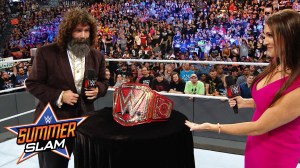 This new title is not just ridiculous sounding, a champion of the entire universe, but now also looks terrible. It is so odd that the current Intercontinental title belt is an old version but at least it has a unique look to it. Now the WWE World, WWE Universal and WWE Women’s championships are almost identical with the only major differentiation being the colouring of the strap. I don’t have a problem with the consistent design but the red leather ruins it for me. What is more important however, and has rightly been pointed out by Mick Foley online, is that two competitors at the top of their game put on a good match for it.
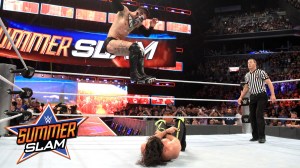 Although good the match was a little disappointing, there’s no getting around that. The first time Finn Balor and Seth Rollins had met in the ring was hoped to have had instant chemistry but although exciting and entertaining it just lacked a little something. As it has turned out Finn Balor suffered a shoulder injury early on and incredibly popped the dislocated joint back in within seconds. However, this did not seem to hamper his performance. The capacity crowd also seemed more concerned with voicing their displeasure to the appearance of the new belt than following the action in the ring which killed the atmosphere. The moment that Balor won the title should’ve been met with a deafeningly positive reaction. Sadly that reaction was absent. I had concluded that the PPV debut of the Demon couldn’t possibly end in failure. Perhaps the crowd had also reached this verdict. It set things up nicely for a series of Rollins/Balor classics as Seth fails to overcome the Demon, elevating the myth of this dark side of Finn Balor. Depressingly we have now been denied this feud as news broke that Finn would be spending months on the sidelines following surgery.
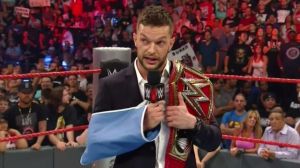 On Raw just 24 hours after winning the title, Finn Balor relinquished it, causing the intended plan for the next few weeks to be ripped up and a hastily arranged series of matches worked out to crown a new champion. I am a big fan of Seth Rollins. Like most of the WWE Universe I am keen to cheer him despite his persistent heel character. But his buckle/throw powerbomb has not only caused the neck injury that retired Sting but has also embarrassed the WWE by injuring one of the company’s most exciting new talents. The curb stomp was replaced by the Pedigree as that was deemed too violent a move and surely now the buckle bomb has to be culled too.

 As the 31st Olympic Games drew to a close in Rio de Janeiro it is time to reflect on the latest instalment of the so-called ‘Greatest Show on Earth’. Prior to the event the International Olympic Committee (IOC) and the IAAF faced their biggest crisis in recent memory. The host country itself had safety concerns with the spread of the Zika virus and faced questions regarding financing and the water quality in Guanabara Bay. Yet despite all these issues the competitive action has spoken for itself, providing gripping tension, explosive excitement and unforgettable moments.
 With the Games fast approaching an investigation found state sponsored doping in Russia bringing into doubt their participation. Despite the findings, the IOC refused to grab the opportunity and impose a blanket ban on all Russian athletes, a mistake the IPC did not make. Instead individual sport’s governing bodies would make the decision regarding Russian participants. As a result Russia acquired a total of 56 medals, placing them fourth in the medal table. It is impossible not to ponder the legitimacy of these medals. Russian athletes are having samples retested and are being stripped of medals from Beijing 2008 and recently shot putter Evgeniia Kolodko lost her London 2012 silver medal. Those elevated to receive medals long after the event have been robbed of their moment to stand on the podium and see their national flag raised for them. Drug cheats ruin it for everyone. Justin Gatlin’s failure to reach the 200m final felt like justice but he leaves Rio having taken silver in the 100m. He has been banned not once but twice for doping offences but is still allowed to compete. If the Lance Armstrong saga proved anything it is that dopers are often ahead of the testers. The presence of Gatlin and Russian athletes jeopardises the sport and unfortunately with the golden poster boy from Jamaica appearing for the final time this process of spectator apathy could be accelerated.
 Usain Bolt is now unquestionably a legend. The triple treble of gold medals in the 100m, 200m and 4x100m relay is a feat which is incredibly unlikely to be bettered. He is not just a phenomenal athlete but the humblest of men. Bolt is a showman. Box office. A man that transcends athletics. His record at the Olympics is unheard of but all achieved without anything other than natural ability, most notably his stride length. It is no coincidence that when he was competing the stadiums were at their fullest. Unfortunately not all events were as well populated by spectators.
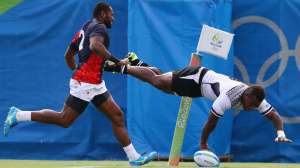 One of the most exciting events in the early stages of the Olympics was the Rugby 7s tournament. Rugby Union had not been included in the Olympic Games since 1924 and in that 92 year gap the seven aside game had become the perfect competition to complete inside three days. The combination of 14 minute matches, incredibly fast athletes and stunning tries made for two riveting tournament for the medals. Few are likely to forget the tension of Team GB’s epic quarter final battle with Argentina, Japan defeating New Zealand, the Australian women overcoming their trans-Tasman rivals or Fiji’s offloading masterclass to seal their own historic gold medal triumph. Team GB’s women fell short in the final stages, failing to claim a bronze medal but the Men’s team, brought together over the summer, did take away a spectacular silver. This would prove to be just one of a record haul of medals for Team GB.
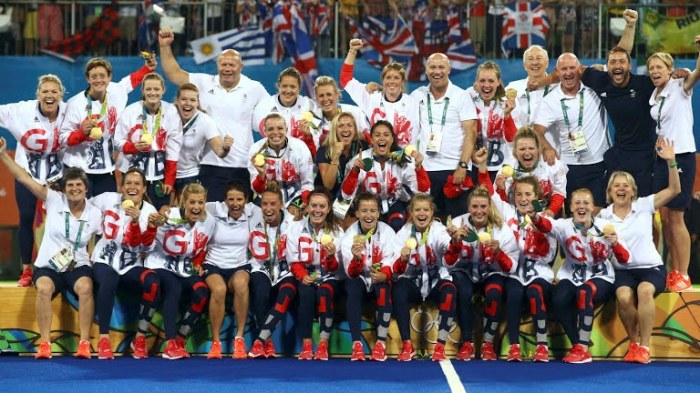 After the incredible achievements of Team GB at London 2012 few imagined that it could be matched, especially without the backing of home support. But yet Team GB managed to not only match but then to exceed all expectations. Their 67 medals edged the 65 achieved in 2012. 27 golds also placed GB second in the medal table, delivering a bloody nose to traditional powerhouse China. In a number of interviews athletes praised the contribution that funding from the National Lottery has made. In the brutal reality of medals equal funding, performances like this prove that the strategy works. It was only 20 years ago that Team GB left Atlanta with only a solitary gold medal. The transformation is astonishing. Not only have the athletes themselves savoured their moment of glory but thousands of miles away so did the British public.
 Despite the time difference millions watched on as incredible moments became etched in history as Mo Farrah, Jade Jones, Andy Murray and Nicola Adams retained their titles. Those were just a few of our stars but contributions came from a wide variety of sports. Team GB picked up medals in the Velodrome, on the athletics track, on water, in the water, in the boxing ring and at the Gymnastics. That isn’t even a comprehensive list. The gripping elation of the penalty shootout victory for the women’s hockey team no doubt provided the highlight to many people’s Friday night. For me the most emotional gold medal victories came for Charlotte Dujardin and her legendary horse Vallegro, in his last competition, and Nick Skelton. At his seventh Olympic Games the 58 year old won individual showjumping gold after a tense six-way jump off. Stood on the podium the emotion took hold and the man who once retired after breaking his neck finally had his well-deserved moment.
 Whilst for many in Great Britain London 2012 will forever be the greatest Olympic games ever, without doubt Rio 2016 has been the greatest for our athletes. Team GB exceeded expectations and proved that our small island is still a country to be reckoned with in sporting competition. In Tokyo in 2020, anything could be possible…
 Bedwyr Gullidge