England 25 – Wales 28

image

The score line is only a fraction of the story.

Wales had been written off by many people after Jonathan Davies, Rhys Webb and Leigh Halfpenny, all key men in Gatland’s team, were ruled out through injury for the whole tournament. This was because they had been drawn in the ‘pool of death’ alongside Rugby Championship winners Australia and the hosts England who have luxury of playing all the big games at their Twickenham home.

Last night’s game was the biggest clash between England and Wales ever witnessed because the reality is that one of the teams may not progress into the quarterfinals and the loser will almost certainly have to beat Australia and cross their fingers. As a result the hype and press coverage was on a scale very rarely enjoyed by rugby union, the team selections were debate excessively and the centre clash between Sam Burgess and Jamie Roberts was promoted as a physical contest which could shake the foundations of buildings in the surrounding areas of London. It was even a Royal occasion as William (with Kate) and Harry did battle in the stands over brotherly bragging rights.

The game produced was a classic. Two evenly matched sides, countering the others offence with brutal defence and the scoreboard being kept ticking over by metronomic goal kicking.

Mike Brown made himself look a right plum by getting involved with a confrontation, which was nothing to do with him in the first place, before being put in his place by British and Irish Lions captain of 2013 Sam Warburton.

Wales once again had problems with the lineout and fell foul of refereeing interpretations at the scrum. A well finished try from England became the only difference between the sides as Wales stayed in touch on the scoreboard.

Then Wales’ injury curse struck again. Scott Williams was stretchered off the field with a knee injury after being a threat in attack and solid in defence. Liam Williams took a nasty blow to the head and will now need to undergo all the concussion assessment protocols. Incredibly Hallam Amos also managed to pop out his shoulder attempting a hand off on Owen Farrell after the whistle had stopped play. So as a result Wales had a winger playing outside centre, a scrum half on the wing, an outside half deputising at fullback and the apocalyptically useless Cuthbert on the other wing.

Despite these handicaps Wales produced a miraculous try with Lloyd Williams racing up the touchline and putting a delicate cross field kick inside for Gareth Davies to cement himself in the history books.

That was only to draw level. The win came from a perfect penalty kick scored by Dan Biggar from as near as makes no odds the halfway line. But to seal it Wales still had to defend that lead for their lives.

England captain Chris Robshaw turned down the opportunity to tie the game under some illusion they could repeat the bravery of Japan against the Springboks. That was never likely to happen as the colossal Luke Charteris and colleagues dumped England’s driving maul over the touchline.

Wales ran the clock down and who else but man of the match Dan Biggar booted the ball into the stands for the final whistle to cue delirium and ecstasy from Welsh fans across the world.

In the public house I was in beer was thrown everywhere, supporters hit the ceiling they jumped so high in the air, grown men were in tears and people were left speechless by the spectacle they had just witnessed.

However, this is far from being the end of the tournament. Wales now have to count the cost of their mounting injury list and finish the job on Thursday against a motivated Fiji where a try bonus point win could well see them seal their qualification for the next round.

England on the other hand can prepare for a barrage of criticism debating the team selection and the captaincy of Chris Robshaw. Owen Farrell more than proved his worth but the selection of Sam Burgess will be questioned as he offered little other than in defence and even then his inexperience in the sport may have led to them conceding far more points. But now the match against Australia could not be bigger for England at their own tournament.

As for Wales they have once again managed to pull off another smash and grab raid of fortress Twickenham and whatever happens in the rest of the Rugby World Cup that moment of victory last night will be talked about for years and years to come.
REVIEW: Summer Rugby weekend

gettyimages
Photo from gettyimages

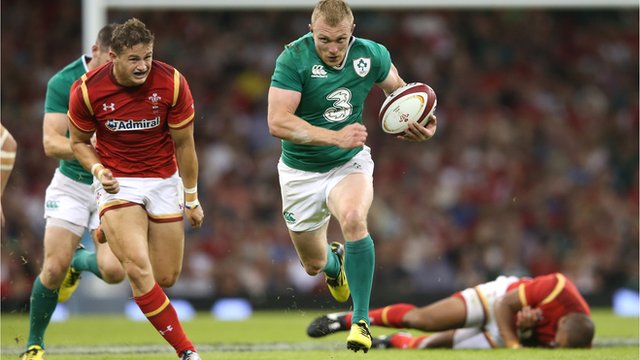
So after training trips to the harshest of climates the Welsh squad returned to the field of play. As with any pre-season game errors were to be expected and with a very different looking Welsh XV including four new caps. What is also traditional is for the typical excuses to be trotted out that Wales start slowly in matches, which must be endemic across the whole squad no matter who they pick. As a result, Ireland accelerated into a 25-0 lead after only 35 minutes, playing with control, patience and intelligence. Wales responded to score a converted try and Eli Walker’s acrobatics although spectacular failed to ground the ball properly before the half time break.

Early thoughts included a poor start from captain Scott Williams, losing the ball in contact, being burnt for pace on the outside by Felix Jones and stepped by the excellent Keith Earls. The scrum was also a concern, Nicky Smith being given a particularly torrid time. Lineouts of course went awry as they often do, particularly when close to the Irish tryline. The second half saw some improvement with Ireland lowering their intensity and seeing the customary raft of changes. Tupric’s try in particular was one to savour but ultimately the result was already sealed.

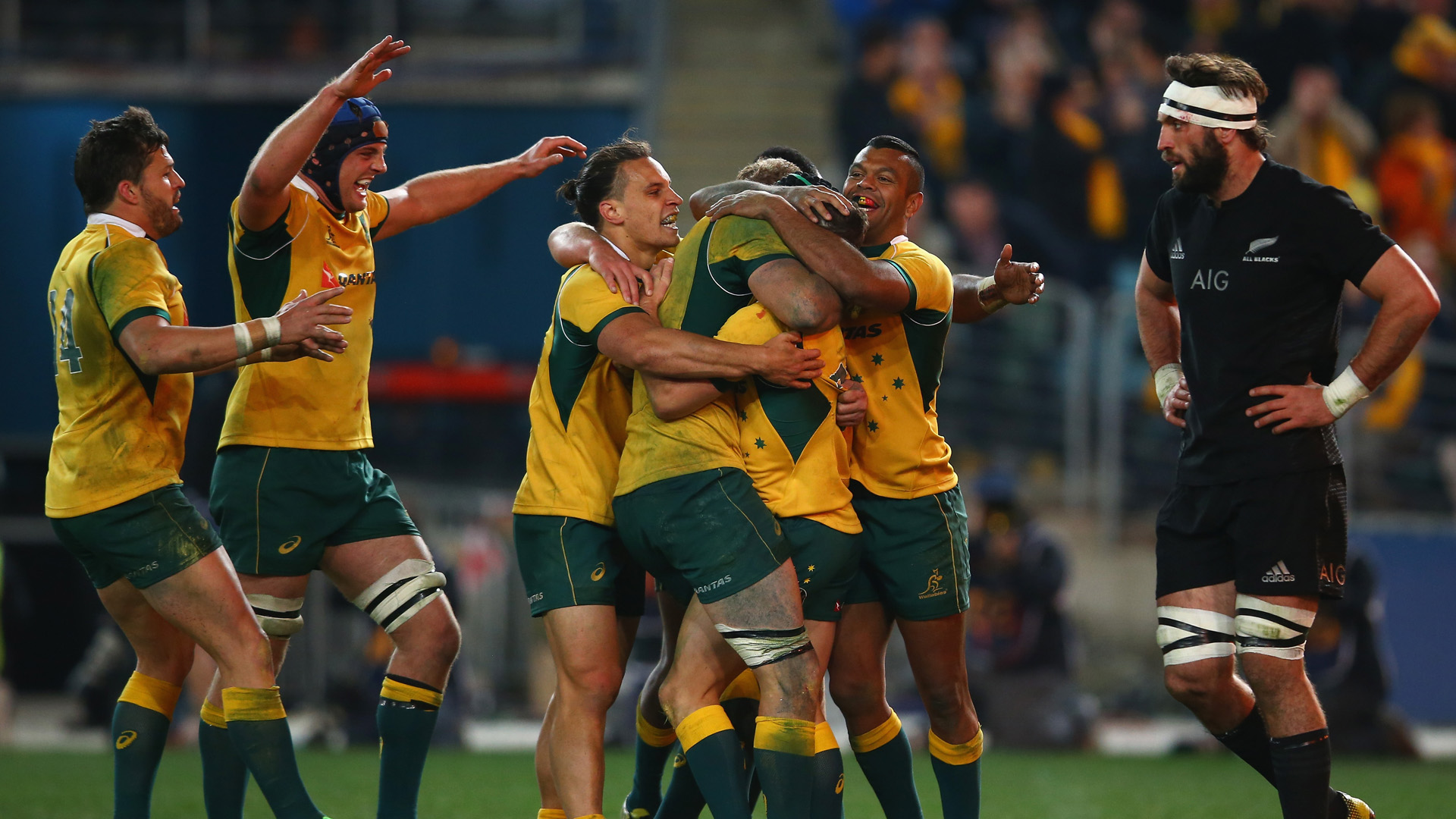
SYDNEY, AUSTRALIA - AUGUST 08:  The Wallabies celebrate with Nick White of the Wallabies after he scored a try during The Rugby Championship match between the Australia Wallabies and the New Zealand All Blacks at ANZ Stadium on August 8, 2015 in Sydney, Australia.  (Photo by Mark Kolbe/Getty Images)
Photo by Mark Kolbe/Getty Images

In other headlines Australia beat the All Blacks for the first time since 2011 and won this years shortened Rugby Championship built on a superb forward display. The squad the Wallabies now have puts them in a strong position heading into RWC2015, with the composure of players like the recalled Matt Giteau precisely what they needed in the backs instead of the mercurial but sometimes appalling Quade Cooper. The All Blacks will be livid with certain missed tackles that lead to tries and you would fully expect them to retain the Bledisloe Cup with a thumping victory next weekend. But suddenly Australia have become genuine World Cup contenders.

_84760950_imhoff_afpAlso of note is Argentina’s fantastic result in Durban beating South Africa for the first time ever. Although the Boks will be disappointed by their performance huge credit to Argentina for their finishing of scoring opportunities and proving that having them joining the Tri Nations has done their team the world of good. Perhaps Argentina, confident of qualifying from their pool behind New Zealand, are a decent bet to make a World Cup semi final.

WRU-home-kit-5-playersAnyway, back to Wales and the inevitable discussion of who will make the World Cup squad from this week’s performance. Short answer, very few.

Hallam Amos – OUT (One for the future but not ready yet)

Alex Cuthbert – IN (Still the same player, culpable in defence and runs straight but fits the big powerful game plan)

Tyler Morgan – IN (Makes the squad with Jon Davies out injured)

Scott Williams – IN (Guaranteed starter in place of the injured Jon Davies)

Eli Walker – OUT (If he’d got downward pressure on the ball to score he would’ve made it in)

James Hook – OUT (Didn’t shine when he really needed to but could cover several positions if selected)

Mike Phillips – OUT (A RWC too far, still his typical self but lost the pace which Rhys Webb and others provide)

Nicky Smith – OUT (Third choice after the certainties Gethin Jenkins and Paul James but might be cover)

Richard Hibbard – IN (May not be first choice anymore but still gives his all with big tackles)

Aaron Jarvis – IN (Probably makes the squad with doubts over Samson Lee and Rhodri Jones injured)

Jake Ball – IN (Solid cover for AWJ and Charteris)

Dominic Day – OUT (Might do a Will James and sneak into a World Cup squad but not very likely)

Ross Moriaty – OUT (Has potential but back row is very competitive and temperament a question)

Justin Tipuric – IN (Guaranteed squad member, might not start the big games but will be crucial on the bench)

Dan Baker – OUT (Anonymous game and Faletau is not going to lose his spot)

Rob Evans – IN (Toss up between him and Nicky Smith for who covers Loosehead)

Kristian Dacey – OUT (Great performer for Cardiff Blues and definitely more caps to come in the future)

Scott Andrews – OUT (Probably misses out to Aaron Jarvis but might make squad depending on injuries)

James King – OUT (Back row far too competitive for him to make the squad)

Taulupe Faletau – IN (Starts at number 8 for the majority of games and rightly so)

Lloyd Williams – IN (More in the mould of number one 9 Rhys Webb than Phillips and makes the squad for that reason)

Gareth Anscombe – IN (Covers 10 and 15, plays flat and good distributor, third choice 10 but could become second choice to Biggar with some good performances)

Matthew Morgan – OUT (Doesn’t fit the power game favoured by Gatland but has skills and pace that could unlock a lot of defenses. Misses out to Anscombe but would be perfect for the Uruguay match)

RWC2015 kitAnd now for the new Wales kit. Reactions have been varied. I personally don’t mind it too much. As usual too much thought has gone into it. The ‘Oxblood’ detail (a darker red stripe) is added because oxblood was mixed with cement because of a superstition that the blood of a strong animal would strengthen a building or structure. Also a trim of ‘Welsh Gold’ adorns the shirt, shorts and socks. Perhaps if Wales had already won the World Cup then that could be acknowledged in the kit. Ultimately it is red and the shorts have gone back to traditional white. The away kit, although appearing to be black, is in fact ‘anthracite’. No matter what Wales wear all the fans want to see is a better performance than Saturday and hopefully plenty of wins!

Premier European Rugby Tournament

This is an idea I had recently following on from an uninspiring debut season of the Champions Cup, with the exception of the Toulon and Leinster match, which was pretty incredible.

The proposal is for a new European rugby club tournament, incorporating the top 3 leagues of the northern hemisphere divided into 3 divisions, it will offer competitive matches on a weekly basis. The season will be constructed in such a way as to provide players with regular breaks in the form of weeks off from action and significant time set apart for the international periods in November and the Six Nations tournament. Players would therefore have 22 regular season matches, plus 4 potential autumn internationals and 5 Six Nations matches, a total of 31 matches in a season, not including playoffs, which will hopefully reduce injuries for players with regularly imposed recovery time.

Initially the 3 divisions will be constructed based on equally dividing up the top 12 finishers in the French Top 14, all 12 teams in the English Premiership and the 12 teams of the Pro 12 who represent Ireland, Wales, Scotland and Italy. The top four teams in each division will be placed into division 1, the second four into division 2 and the third four into division 3, as demonstrated below. Promotion and relegation will also occur between divisions and it is also proposed that the worst placed French and English clubs will compete in a 2 leg playoff match against the top ranked team from the French Pro D2 and the English Championship. This does not therefore seclude the competition from other teams, giving them the aspirational goal to break into the competition. There is also the potential to have the top 4 teams of division 1 competing in a semi-final and grand-final to declare the ultimate champion, although I firmly believe that the top placed finisher in the league structure deserves a trophy to acknowledge that fact also.

Live matches will be offered to all broadcasters with highlights packages from all 3 divisions also available for every matchday.

Division 1

  1. Toulon
  2. Clermont Av
  3. Toulouse
  4. Stade Francais
  5. Northampton
  6. Bath
  7. Leicester
  8. Exeter
  9. Ospreys
  10. Glasgow
  11. Munster
  12. Ulster

Division 2

  1. Oyonnax
  2. Racing Metro
  3. Montpellier
  4. Bordeaux Begles
  5. Saracens
  6. Wasps
  7. Sale
  8. Harlequins
  9. Leinster
  10. Scarlets
  11. Connacht
  12. Edinburgh

Division 3

  1. La Rochelle
  2. Brive
  3. Grenoble
  4. Castres
  5. Gloucester
  6. London Irish
  7. Newcastle
  8. London Welsh
  9. Dragons
  10. Cardiff Blues
  11. Benneton Treviso
  12. Zebre

Schedule example for  2016-2017 season

Matchday 1 – Weekend of 27th August

Matchday 2 – 3rd Sept

Matchday 3 – 10th Sept

Matchday 4 – 17th Sept

Matchday 5 – 24th Sept

Matchday 6 – 1st Oct

Matchday 7 – 8th Oct

BREAK – 15th Oct

Matchday 8 – 22nd Oct

Matchday 9 – 29th Oct

AUTUMN INTERNATIONALS

5th November

12th November

19th November

26th November

Matchday 10 – 3rd Dec

BREAK – 10th Dec

Matchday 11 – 17th Dec

Matchday 12 – 24th Dec

Matchday 13 – 31st Dec

Matchday 14 – 7th January 2017

Matchday 15 – 14th Jan

Matchday 16 – 21st Jan

BREAK – 28th Jan

SIX NATIONS 2017

4th February

11th February

6 NATIONS BREAK – 18th February

25th February

6 NATIONS BREAK – 4th March

11th March

18th March

Matchday 17 – 25th Mar

Matchday 18 – 1st Apr

Matchday 19 – 8th Apr

Matchday 20 – 15th Apr

Matchday 21 – 21st Apr

Matchday 22 – 29th Apr

Division 1 Semi Final and Playoff 1st Leg – 6th May

Division 1 Final and Playoff 2nd Leg – 13th May