 The critics have been pretty scathing about this latest offering from the DC comic universe whilst fans have been very vocal with their enjoyment and aggressive towards those who have not shared their opinions. As is always my policy, only by viewing the piece can comment be made. So I have watched it and have thus formulated my own opinions. However I have found myself falling off the fence towards the opinions shared by critics.
The following will include a number of spoilers so do not hamper your own enjoyment by reading on if you intend on watching the film yourself.
Following on so quickly from the dud that was ‘Batman vs Superman’, released mere months ago, comes ‘Suicide Squad’ a tale about a group of villains from the DC Universe coming together for a special mission for the good guys, who are of course the US Government. The formulation of this squad is based on the possibility that now Superman is dead another Superman might exist and could potentially not be on the side of the authorities and therefore a terrorist. This Taskforce of unruly and uncontrollable maniacs is supposedly going to be a line of defence against the forces of darkness. It makes as much sense as two good guys (Batman and Superman) going up against each other. That being said the concept has vast potential. Antiheroes receiving the focus for an entire film fits the DC Universe much better than Marvel given the darker tones explored through the comic books and also previous film adaptations such as Tim Burton’s ‘Batman’. Sadly, the final result is nothing but a crushing disappointment.
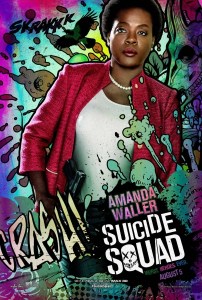 This is probably an old-fashioned idea but this film needed someone to write the plot and a scene breakdown on a piece of paper. Such a basic act would’ve revealed the well documented glaring structural problems that exist throughout. As expected, the film required a number of scenes introducing the vast cast of characters who would form Taskforce X. These introductions are not balanced in the slightest with numerous flashback sequences and a central focus on Deadshot and Harley Quinn but more of them later. Making the introductions is Amanda Waller, a Government official who has struck upon the nonsensical idea of using the most dangerous criminals to execute dangerous missions. She is deliberately unlikeable to encourage the audience to root for the squad, revisiting conspiracy-fuelled themes of distrust for authority figures.
To be clear however there is no immediate threat that requires the formation of the Suicide Squad. Such is the abysmal plotting, the squad’s formation creates the threat that they end up battling. Amanda Waller manufactures the peril herself as before the team is even formed one of the members goes rogue, the Enchantress.
 Cara Delevingne is a model trying to act and frankly it comes across that way. She is the most bland villainess to hang an entire movie on. The key to any good drama is to create peril with an imposing and believable villain. It is no wonder that when it really matters her dialogue is heavily manipulated by voice effects in an attempt to add gravitas and threat which Delevingne is simply incapable of delivering. As the movie reaches is climax the Enchantress has created a Stargate in the sky because magic is the perfect excuse for yet another CGI monstrosity that looks visually impressive but lacks meaning or intelligent thought. Similarly, her faceless soldiers are meaningless fodder to add jeopardy and her brother, another CGI creation which is particularly unconvincing.
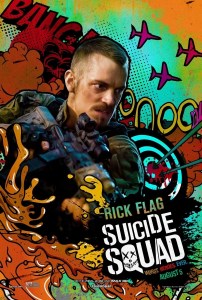 Part of the Enchantress’ backstory is that this mythical being, worshipped as a God by an unidentified Central American civilisation, has taken over the body of archaeologist June Moon. She in turn is the love interest of Rick Flag, the military man charged with controlling the unruly Suicide Squad. His character is quite strong, admittedly with questionable motivation but he is a solid presence in the film and shares the lead with the only major actor Will Smith as Deadshot with the two characters providing an engaging double act throughout.
 Deadshot is the real lead of the piece, sharing entertains exchanges with Rick Flag. This is unsurprising given the casting of consistent leading man and box office draw, Will Smith. The appearance of such a familiar star does mean that Deadshot’s mask is only worn briefly so as not to conceal the film’s top star. Deadshot does however receive the most attention regarding his backstory. In fact Deadshot receives three introductions all of which are focused on his daughter. Whilst it is of course difficult to be separated from your child the point is excessively laboured and frankly he may be a talented shot but he could always get a job at Wallmart to provide for his daughter instead of choosing the life of the hitman. Fortunately Smith’s ability as the wise-cracking lead, mirroring Robert Downey Jr’s Ironman for Marvel, showcase those skills honed in other summer blockbusters such as ‘Independence Day’ and ‘Men in Black’. This influence is crucial in making the chaos presented remotely passable for viewers.


Other members of the Suicide Squad receive much less attention. Diablo is particularly interesting, seemingly underestimating his power and ending up incinerating his wife and children, but even this could’ve been presented clearer. Killer Croc is also very well realised but is presented as a simple monster. Similarly, Katana and Boomerang are given very little introduction but the latter is at least particularly entertaining outside of the fight sequences. Shamefully the character of Slipknot is not even introduced properly but appears only to get killed, such is the amateurish plotting to prove a point as to why the squad are participating in this madness. With so many characters it was always a tall order to give them equal coverage but that possibility is extinguished as the limelight is instead hogged by Harley Quinn.
 The character of Harley Quinn is intriguing, corrupted by the Joker and choosing to follow in his crazed footsteps. Margot Robbie is tasked with bringing her to the screen and is very entertaining as the pigtailed lunatic. However, Harley is completely over sexualised, bordering on the grotesque mysogynistic. Sexually licking the bars of her cell is one thing but deliberate shots of her hotpants and rear end are simply unnecessary. Her impractical outfit is then maximised by a predictable rain shower which allows for Harley’s entry into a wet t-shirt contest. Whilst I am sure none of the suits involved in constructing this film are even remotely aware of the popularity of Harley Quinn with cosplayers but the sexualised image presented in this film is going to be replicated by teenage girls. As a result all those involved, from the film makers to the distributor, have a responsibility to consider how these images are going to impact on their audience. Another individual hampered by the decisions made regarding their onscreen appearance is the Joker.
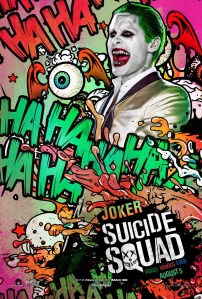 Jared Leto’s Joker is an irrelevance in the film. Whereas Ben Affleck’s Batman makes a few cameos over the two hour duration, the Joker can only be described as having an extended cameo. I’m not sure if I was expecting more of him during the film but watching Leto’s portrayal I am grateful that his appearances were limited. He has to provide the worst onscreen version of the Joker ever. It is a modern interpretation but that results in an image conscious gangster, hanging out in nightclubs, covered in bling and tattoos. He is unpredictable and manic, capable of spinning on a razor blade but the Joker’s unpredictability should also extend to his image. The sinister false smile is sadly now only a tattoo on the back of his left hand. Making the Joker look like a typical gangster, save for the green hair, reduces him instead of elevating him above stereotypes. This gangster image therefore smothers what interesting aspects Leto was attempting to bring to the role. The one successful line is when the Joker declares that he is “just going to hurt you, really, really badly”. Leto is stripped back and delivers the line in a truly sinister manner, it is just a shame that there is so little else that matches this high point.
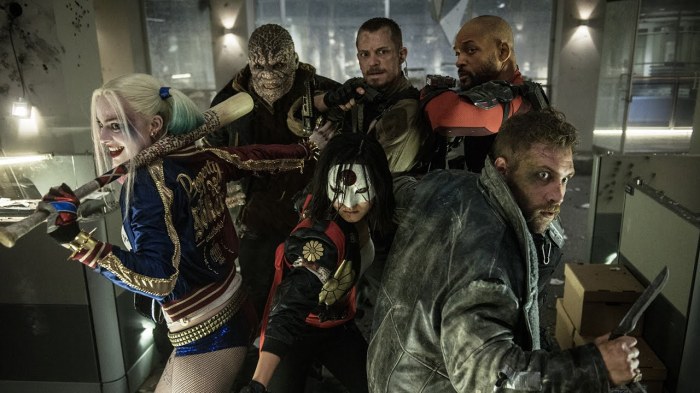 I cannot understand how the final product can possibly be the vision which the director David Ayer had set out with when embarking on the project. It is a textbook example of a studio corrupting their own output based on the reactions of the public to other movies. For example jokes are inserted, not skilfully but in a manner akin to dropping an anvil onto an orchestra and expecting a symphony, because Deadpool’s wit entertained audiences. Similarly, ‘Guardians of the Galaxy’ featured a brilliant soundtrack, presented as a mix-tape which entertains both Star Lord during the story as well as the watching audience but the retro tracks also juxtapose so well with the futuristic alien visuals. Suicide Squad however just drops recognisable tunes into the edit with no connection whatsoever to the visuals. The most appropriate word to describe it is ‘cynical’.
DC have been playing catchup with Marvel’s movie offerings but instead of embracing the differences they have simply attempted to replicate their successful formula. Suicide Squad is a missed opportunity that is so poorly executed but because it has drawn massive business at the Box Office it will be declared a success. The standalone Wonder Woman movie looks promising and hopefully will not be clouded by the influence or appearance of another superhero to distract from the plot. DC’s inevitable response to Marvel’s Avengers will of course follow with the Justice League movie. Given the deeply flawed offerings of ‘Batman vs Superman’ and now ‘Suicide Squad’ the Justice League movie has to be approached with a significant amount of trepidation.
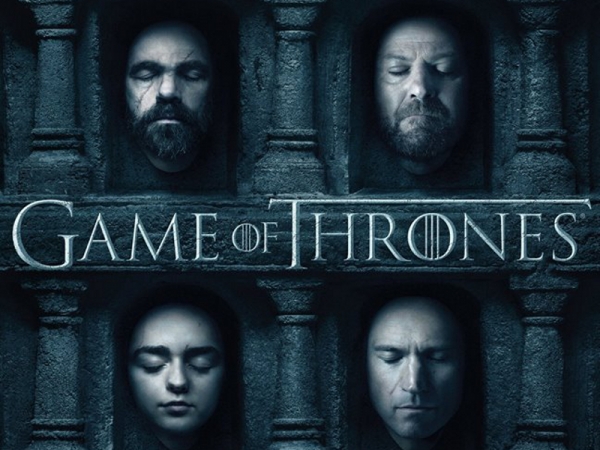 In a season which had a pedestrian build-up, to say the least, slowly putting in place the pieces it needed to deliver an impressive finale and it didn’t disappoint. After setting it all up, the final two episodes roared to life with explosive scenes that redefined the phrase “must see television”. All the plot threads have had significant screen time dedicated to establishing events but the payoffs were more than worth the wait. If you’ve not caught up then do not hamper your enjoyment by reading further, there will be spoilers!
 Last week saw the epic ‘Battle of the Bastards’ for Winterfell and certainly lived up to expectations. Fortunately good triumphed over evil as the Starks recaptured their home and Ramsey Bolton finally got his just desserts. More than that the episode saw a truly spectacular battle. It’s epic scale alone set new standards for what can be achieved with a supposed TV budget. There was a gritty, and at times suffocating, realism which heightened the brutality and the chaos of such a battle. From the very start there were moments where the viewer is left concerned that things were not going to go the way of the Starks, beginning with Rickon’s death. This was at the hands of an arrow from Ramsey Bolton, at his most manipulative and despicable that continued as he instructed his archers to shower down arrows on his own men, building a grotesque wall of corpses with soldiers from both sides. With the Wildling Warriors and Jon Snow surrounded all seems lost.
  But then as the audience’s collective heart sinks, Sansa and Littlefinger come to the rescue with the Knights of the Vale. The overhead shot of the cavalry sweeping away the Bolton army was beautifully created, sending Ramsey into retreat behind the walls of Winterfell to little avail. Jon Snow gets his shots in as he pummels at Lord Bolton’s sickening face but it would be for Sansa to have the final triumph and the last shot of the show. Ramsey’s cruelty ultimately proves his undoing and Sansa walks away with a subtle smile knowing she has got her revenge.
 All the scenes in King’s Landing for effectively the last two seasons have been building to this moment, the Trial of Cersei Lannister before the Seven Gods. The rise of the Faith Militant had of course proved to be a catastrophic miscalculation by Cersei, having to endure the humiliating walk of shame at the end of Season 5. But you always knew she was going to have her revenge and boy did she, also wiping out the Tyrell’s at the same time. Loras admits his guilt and dedicates his life to the Seven Gods, meaning the graphic mutilation of his pretty forehead. His life didn’t have long left however as, in a plot stolen from Guy Fawkes, wildfire tore through the Great Sept of Baelor in another spectacularly delivered effect. Yet in a typically unexpected twist Cersei’s greatest victory resulted in her cruelest loss as King Tommen drops to his death in a shot similar to the humourous demise of Denholm Reynholm in ‘The IT Crowd’. You feel that with all her children gone, like Lady Olenna Tyrell, there will be no limits to her madness.
 The extended running time of ‘The Winds of Winter’ was fully utilised as a number of threads were tied together, such as Sam and Gilly arriving at Oldtown and Shireen’s brutal demise last year finally catching up with Melisandre. Arya Stark’s personal journey finally begins to be accelerating as she ticked another individual off her kill list in this episode. The time spent learning the ways of the House of Black and White finally come to fruition as she wreaks her revenge on Walder Frey on behalf of her mother, brother and all the viewers shaken by the events of the Red Wedding.
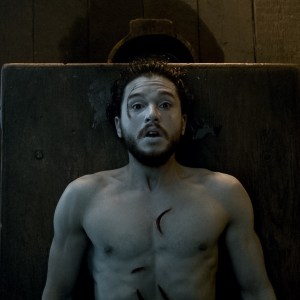 Jon Snow’s own journey during this season, which of course started with him being dead and in need of resurrection, also ends in triumph as he is declared ‘The King in the North’. Once again however it is young Bella Ramsey who steals the scene as Lyanna Mormont, shaming the other Lords of the North, turning the tide and triggering the acknowledgment of his place as ‘King in the North’. A particular thread still left outstanding is that of Sansa Stark and Littlefinger, the lecherous and goateed individual revealing his intentions for the Iron Throne in this episode. However you feel that Sansa will not ever forgive him for handing her over to the Boltons and his comeuppance may come in Season 7, when he will surely pay a heavy price.
 Another exciting prospect for Season 7 is of course the fact that finally, FINALLY, Daenerys is making her move for the Iron Throne and heading for Westeros. The building of her army has taken an eternity but now she stands with Dothraki and Unsullied warriors, the ships of Yara and Theon Greyjoy, an alliance with the Martels and Tyrells, the council of Tyrion and Varys plus three freaking dragons! As will probably be the case there might be an extended period of build up before a battle between the Lannister and Targaryen armies that will surely raise even higher standards for epic television storytelling than we have already enjoyed in Season 6. Beyond that I predict we will also be treated to a thrilling climax between fire and ice because lest we forget in all this excitement, “Winter is Here”.
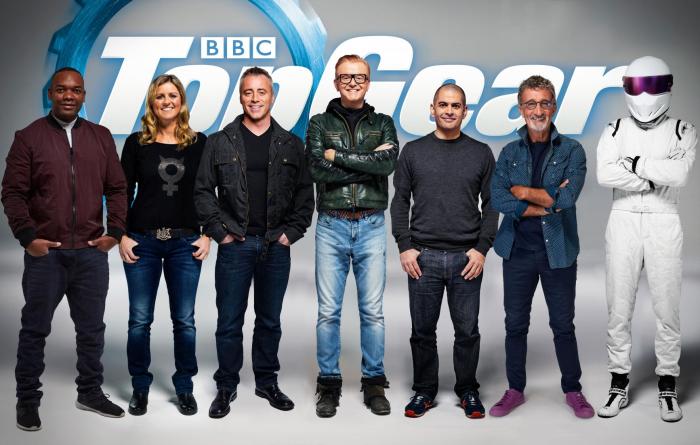 In perhaps the most anticipated relaunch of a television programme since Doctor Who returned in 2005 another global BBC brand returned to our screens last night. The strategy was clear from the outset, replicate the format of the previous show but with new presenters. Unfortunately the team of seven was largely absent with Sabine Schmitz only making a cameo and the limelight being taken by Chris Evans and Matt Le Blanc. Evans is clearly excited to be given the opportunity to present the show but burdened with the pressure and responsibility of the relaunch couldn’t find the balance between addressing the studio audience and the viewers at home, resulting in some very shouty delivery. Matt Le Blanc is the star although he should clearly have opened with a “how you doing?” The American was far more natural and even though known as an actor he appeared more than comfortable in the role of presenter. During his films, which as usual were gloriously shot, for this first episode Le Blanc is knowledgeable and engaging, managing to grasp the dry sense of humour familiar to a British audience.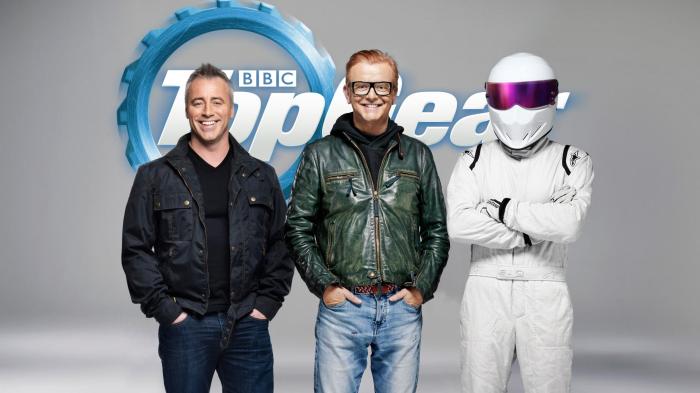

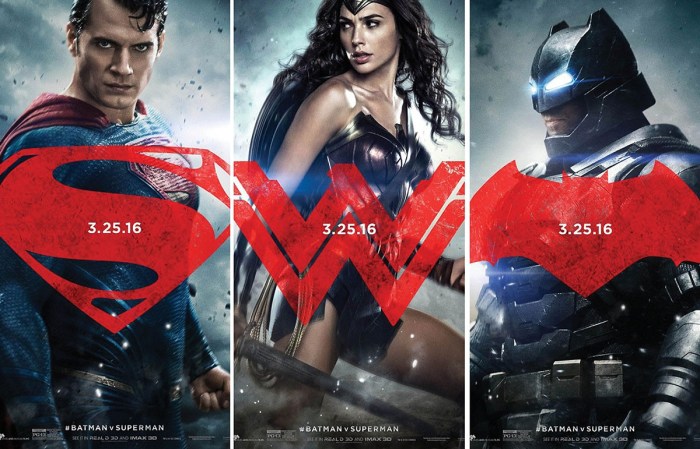
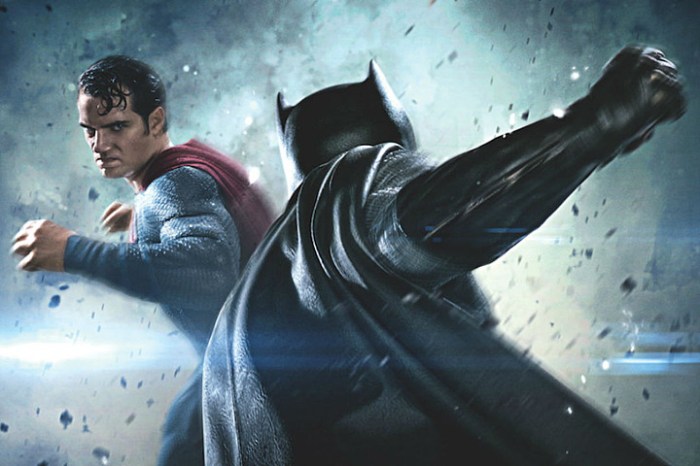 The alien Kryptonite element centres around Jesse Eisenberg’s Lex Luthor, a frankly hideous portrayal, spouting nonsensical verbal diarrhoea in an attempt to convey the character’s lunacy. Similarly suffering from the story is Lois Lane, often pointed to as a beacon to other media of how to portray female characters as strong-willed and empowering. Instead, Lois is reduced to the role of ‘damsel in distress’ not once but thrice, Superman’s ‘spidey-sense’ tingling whenever his beloved is in danger no matter where on the planet she is. In contrast Ben Affleck’s portrayal of Batman is strong, an aging caped crusader no longer at his peak and given more room to strike up an entertaining relationship with Jeremy Irons as Alfred and it seems only a matter of time before a stand alone Batfleck-flick is released. Hopefully, it will be a lot tighter in construction than this film’s effort.
 It is a shame that the film disappoints because underneath the effects-heavy bravado is a fascinating story which questions how the elevation of Superman to that of a God has the potential to divide humanity. This is based on the fear that if this all powerful alien chose to he could wipe out the residents of planet Earth. Similarly, as he is defined as an American icon where does his jurisdiction end and what of the costs of his actions, particularly to the human lives affected and even those ended? Sadly, that line of questioning is swiftly disposed of as more destructive battles drag out the run-time even further with an invented Kryptonian monster used to unite the warring caped heroes with the randomly introduced Wonder Woman so as to set up the Justice League movies to follow.
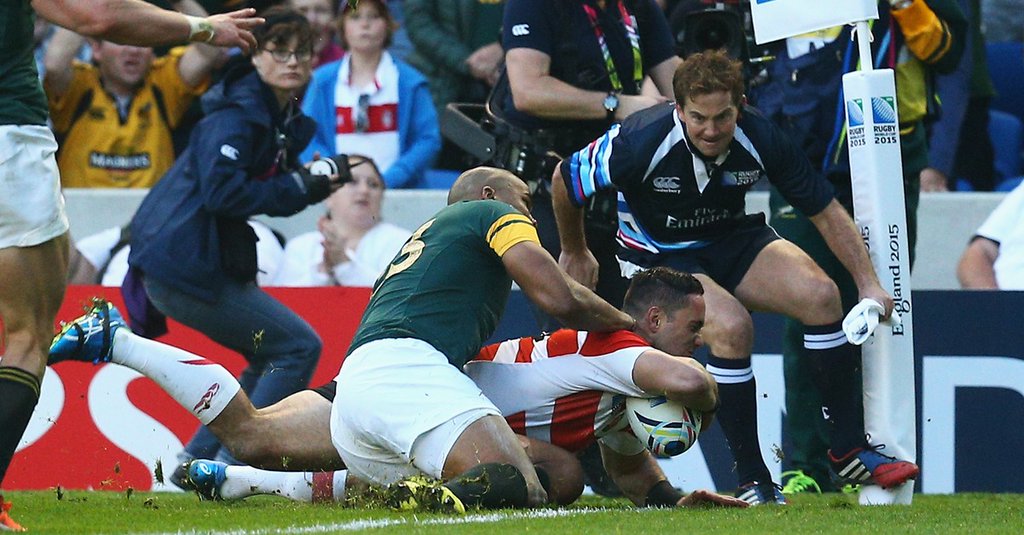
 Rugby World Cup 2015 was a huge success. Despite eye-watering ticket prices and a decision to have football stadiums hosting matches instead of the rugby heartlands the tournament generated fantastic atmospheres and delivered some particularly memorable matches. Few will forget Japan defeating the Springboks in the ultimate example of having confidence in ones own ability. New Zealand played a brand of ‘Total Rugby’ from a different planet against France in Cardiff. There was the controversy of Australia’s last minute victory against Scotland and Craig Joubert’s dash from the pitch. Wales overcame all the odds created by a lengthy injury list against England to pull off a famous win. The hosts failing to emerge from their pool, Stuart Lancaster losing his job and the entire Sam Burgess saga was pure sporting soap opera. The final match itself also provided a tremendous advert for the sport with plenty of action and drama, ably controlled by a Welshman.
 The relationship between the Welsh Rugby Union and the professional regional teams has certainly been strained in recent years and 2015 was no different. Not that long ago we had the Faletau affair with the talented No. 8 venturing to Bath anyway, leaving the Dragons with no transfer fee and the WRU left with egg on their face. It is a peculiar situation with the Union trying to attract it’s big name stars back to Wales with central contracts but their contribution to their region is often limited. There are five professional teams, Scarlets, Ospreys, Dragons, Blues and of course Wales, all with a core support. Plus, there is your local grassroots club in the town or village where you live. With so much rugby available, clashes are bound to happen, people have busy lives and responsibilities, the costs add up, plus the amount of television coverage, it is no wonder that attendances are hampered. In a few weeks the Six Nations will return and the nation will join forces again but the poor players will be flogged further after the tournament with another four Test matches by the end of June, three of which are away to the World Champions.
 The law book, refereeing and the crucial interpretation variations are probably the most debated part of the sport. A demand for accuracy has resulted in an increasing reliance on the Television Match Official hampering the flow, momentum and entertainment aspect of the game. The Maul in particular has proved to be an effective source of points because the whole area has become a shambles. Players join the maul in front of the ball, the player with the ball often detaches and moves to the back in order to guide the drive and defenders are blocked from tackling the ball carrier. Equally the scrum has resulted in plenty of lost time with teams using the set piece as a source of points instead of a simple way of restarting the match.
 2015 was also sadly the year when we lost the first rugby superstar, Jonah Lomu. 20 years ago he changed the sport and became a global icon. His power and pace was matched by his humility. Sadly, he was never a World Cup winner but there is no greater tribute to Lomu and the equally imposing Jerry Collins, than having later All Black icons McCaw, Carter and others successfully retaining their trophy and cementing their place as perhaps the greatest sports team in history.
 The series finale of Doctor Who is one of the highlights of the year but so often fails to match the hype, could ‘Hell Bent’ buck the trend? Sadly not. After the superb effort of last week’s episode the viewer is brought down with a crushing bump. In ‘Heaven Sent’ the Doctor struggles to deal with the loss of Clara, angry, alone and afraid. But it’s okay because this week he has found her again, almost immediately, in an American diner of all places. So what was the point I hear you cry? Who knows!
  The companion is a crucial part of Doctor Who and why it is successful. They are the human, more often than not, that the viewer can connect with and journey with vicariously. By contrast the Doctor is an alien and so difficult for us to relate with. This has been the case since the beginning when the old man in a junkyard was a complete mystery and two school teachers provided audience connection. However, when the show becomes all about the companion it sidelines the Doctor, your leading man, belittling the programme to the level of generic serial drama (soap opera).
 Clara Oswald is the absolute worst culprit for this. She became the impossible girl, splintered along the Doctor’s timeline to save him over and over again. She triggered the Doctors’ change of plan and the ultimate rescue of Gallifrey. In ‘Listen’ (2014) she cements herself as the reason why a young Timelord had a fear of the dark. A year ago the series finale became the story of heartbreaking loss of boyfriend Danny, suffocating an exciting Master/Cyberman storyline into an irrelevant sideshow. History has repeated itself with that one. She has been the villain through Zygon doppelganger Bonnie and has become the Doctor, Jenna Coleman’s face even appeared in the title sequence for Death in Heaven, as sacrilegious as you can get. Now the character even has herself a TARDIS! The lunacy of a woman who apparently couldn’t work iplayer or wifi now being able to pilot a time machine is unfathomable. Friends are those who leave footprints on our lives, Clara Oswald has left a steaming turd.
 As has been the trend with the whole series there was no big action set pieces just dialogue heavy acting lessons. Last we knew of Gallifrey it had been placed in a parallel pocket universe, however at the end of all things it magically reappears in it’s original universe so the Sisterhood of Karn can pop by. Explaining that away is conveniently passed over. However, Gallifrey looked incredible and there was even a new old TARDIS to get gooey eyed about. Rassilon was overthrown. There were nice cameos from a Dalek, Cyberman and Weeping Angel, just because. We even had a returning Maisie Williams, again just because. Who even knows what the hybrid was, apart from a plot point, so sadly no new fantastically brought to life creature. Just a prophecy that delivers only more words. The elements were all there including Peter Capaldi at the absolute height of his acting skills but sadly nothing but a flat aftertaste is delivered. At least he finally has his own sonic screwdriver, only taken 2 years!
 Spectre brings to a conclusion the four Daniel Craig Bond films, culminating in the complete tying up of a storyline which began in 2006 with Casino Royale. His second film, Quantum of Solace, alluded to this overarching organisation and I am pleased to have had that story brought together in what one can only presume is Daniel Craig’s final outing as 007. He has been a captivating Bond, ably delivering both the witty one-liners and the physical action scenes which have revitalised the brand and brought it into the 21st Century competing with the successful Bourne trilogy. But Craig is just the lead in a spectacular ensemble cast.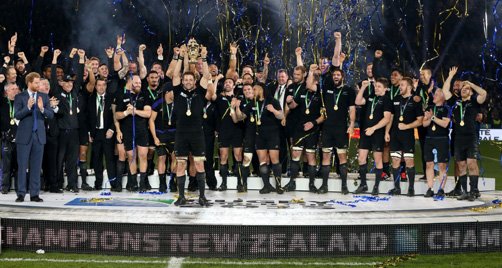


 Bedwyr Gullidge